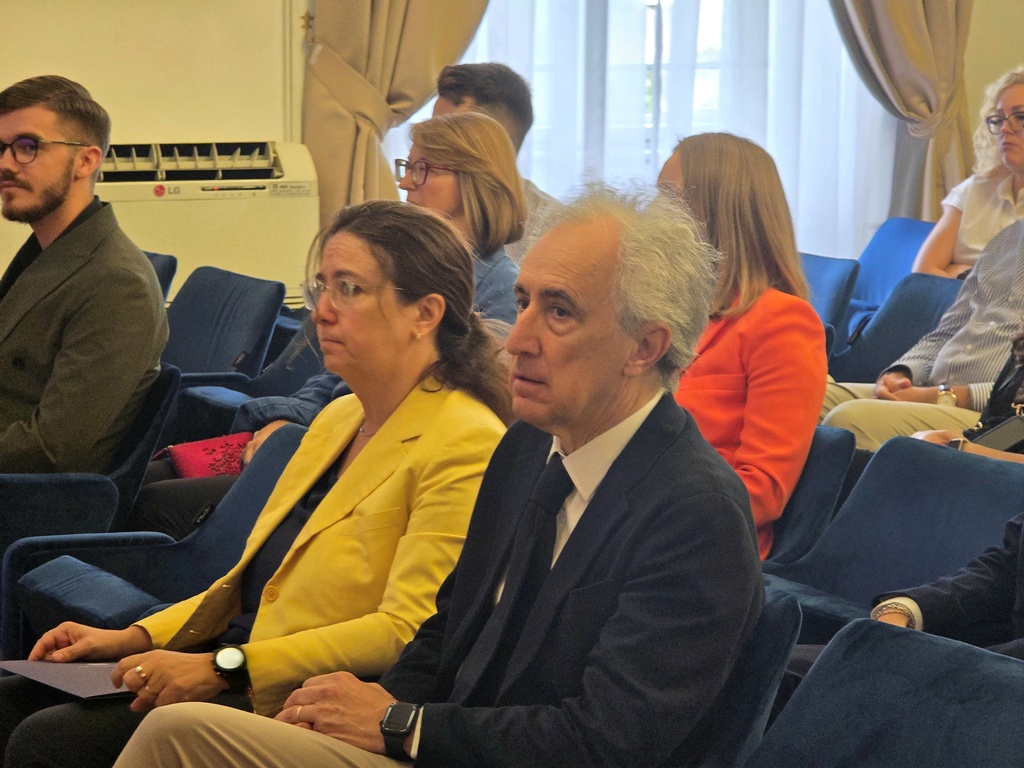
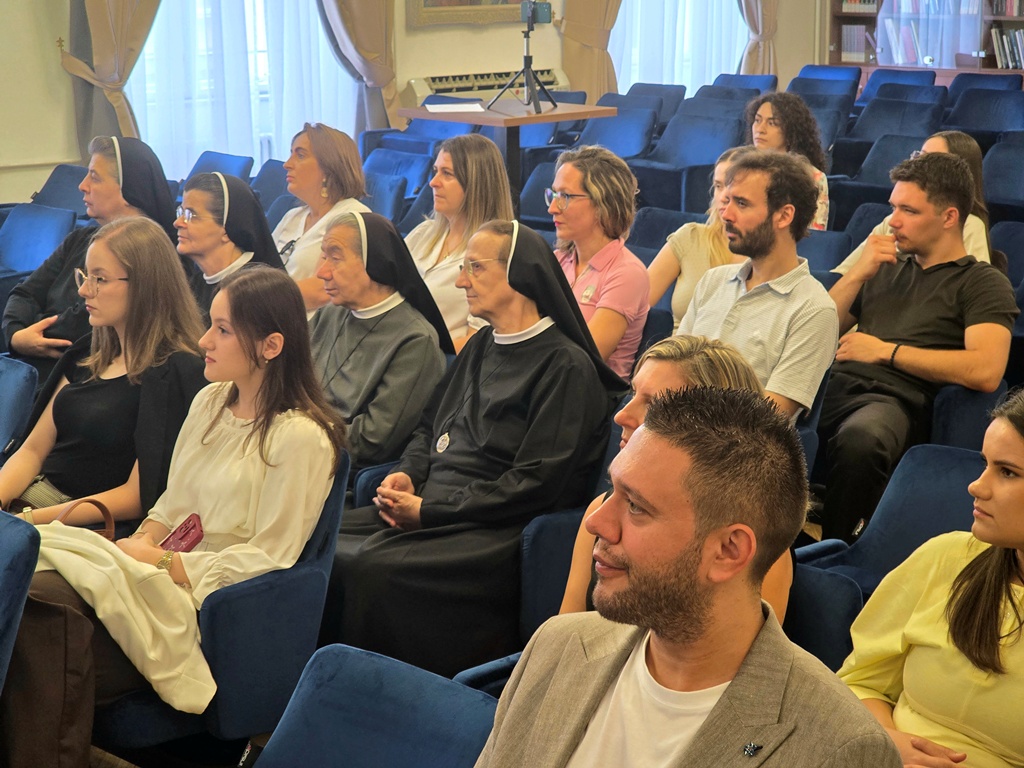
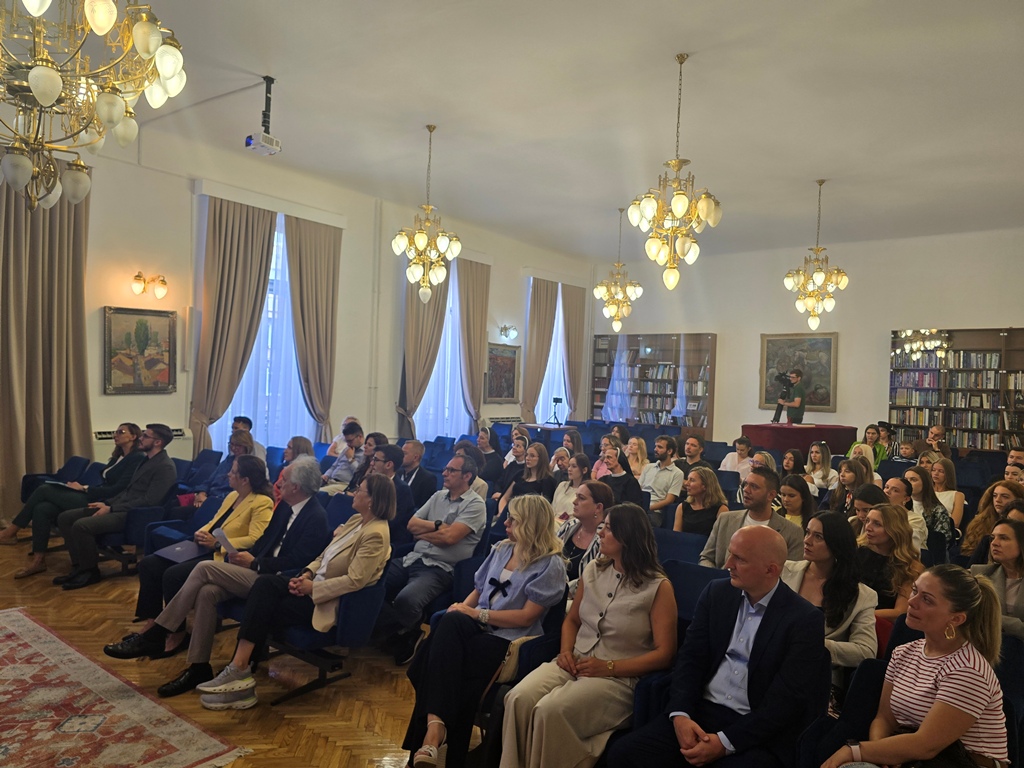
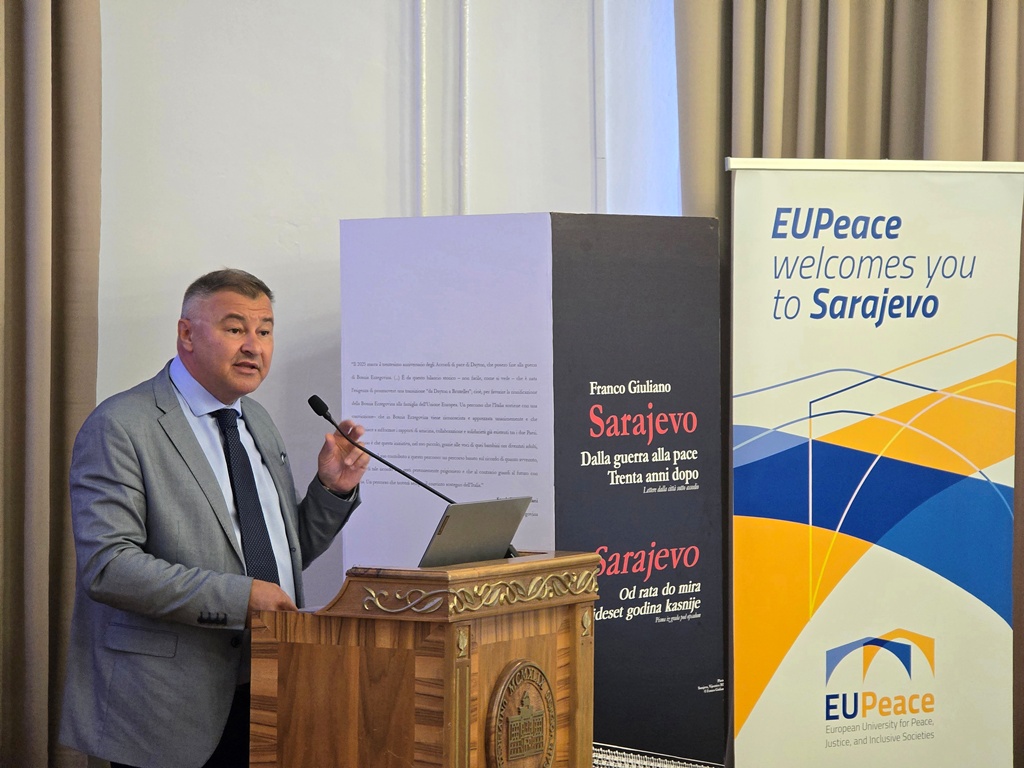
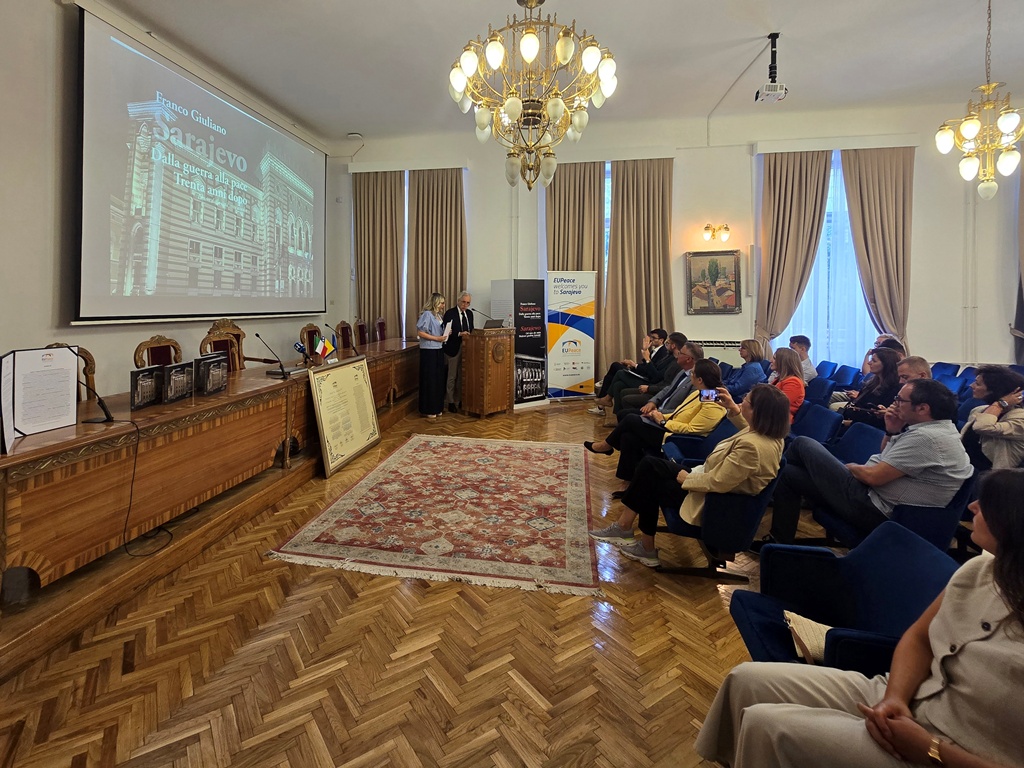
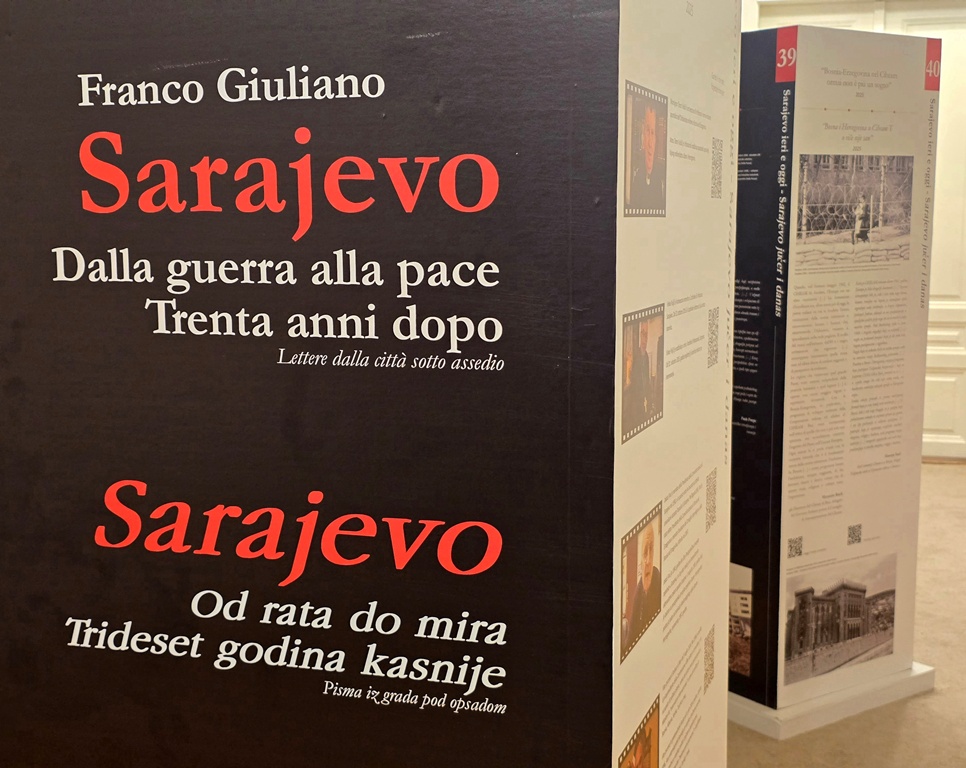
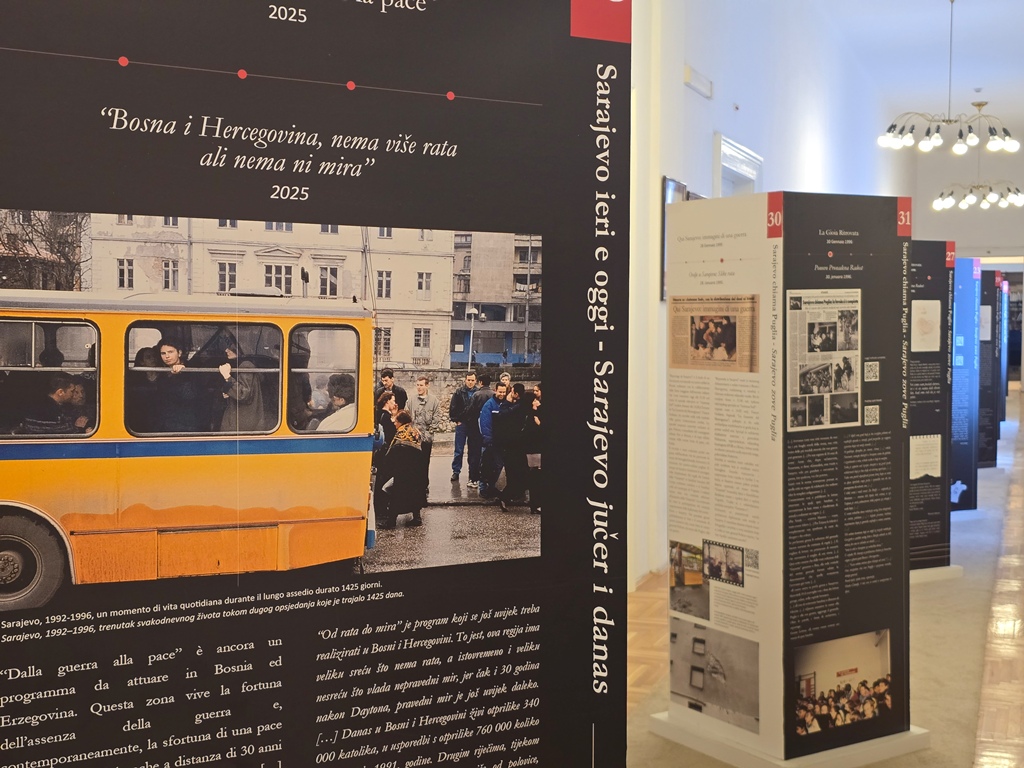
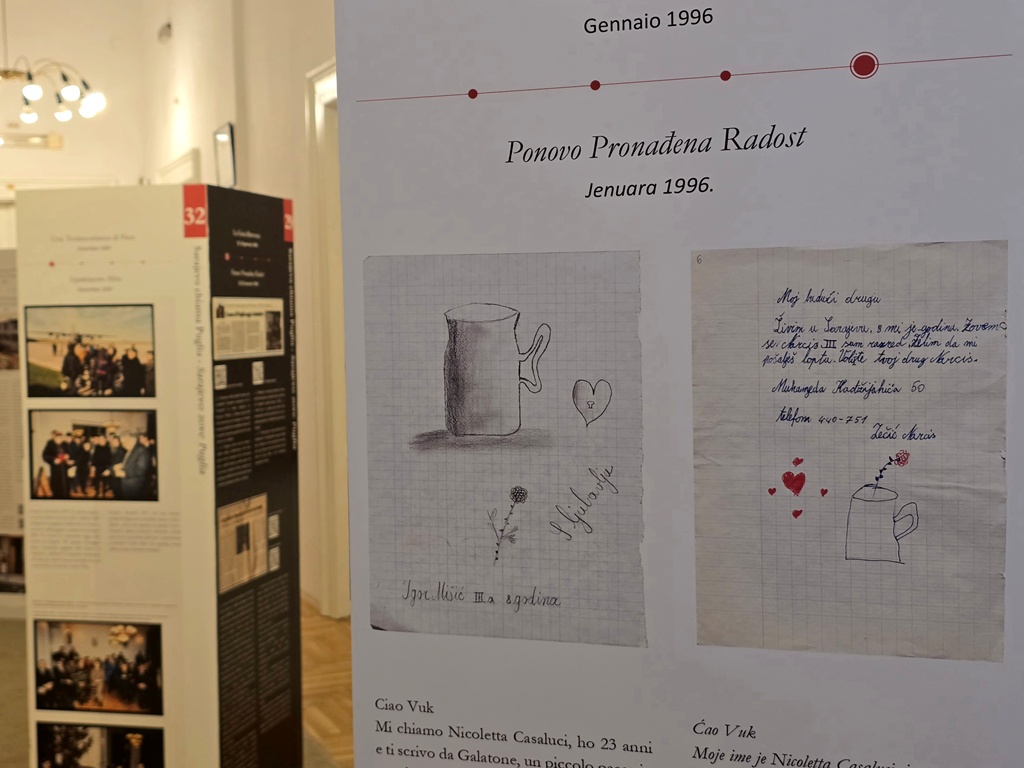
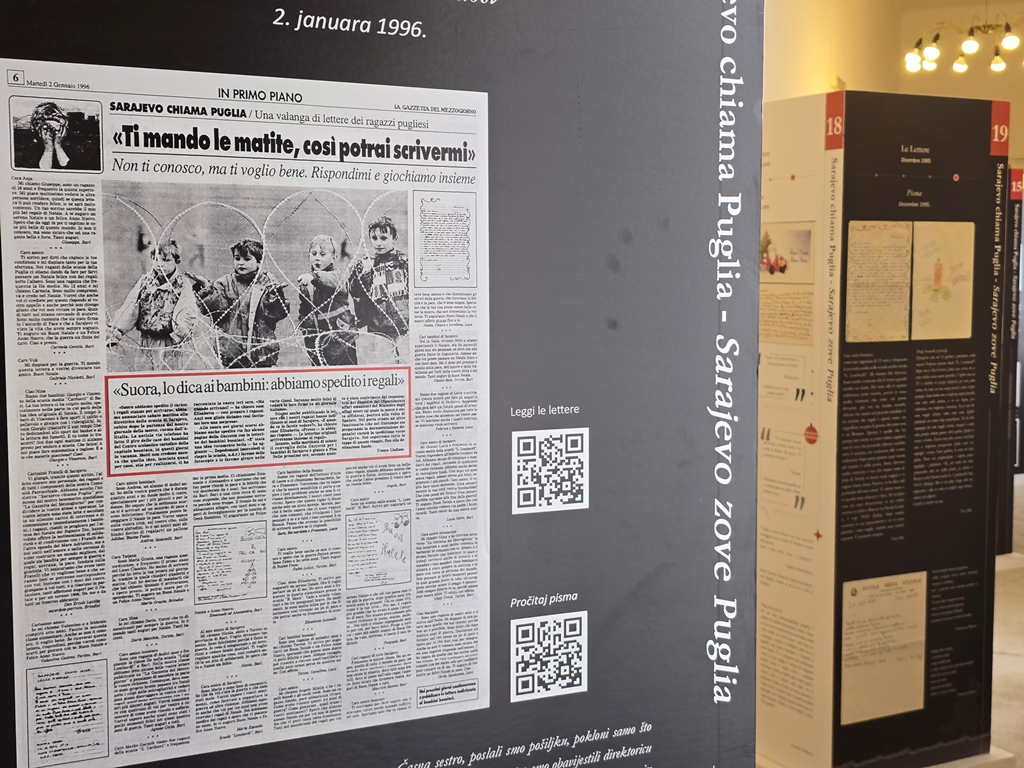
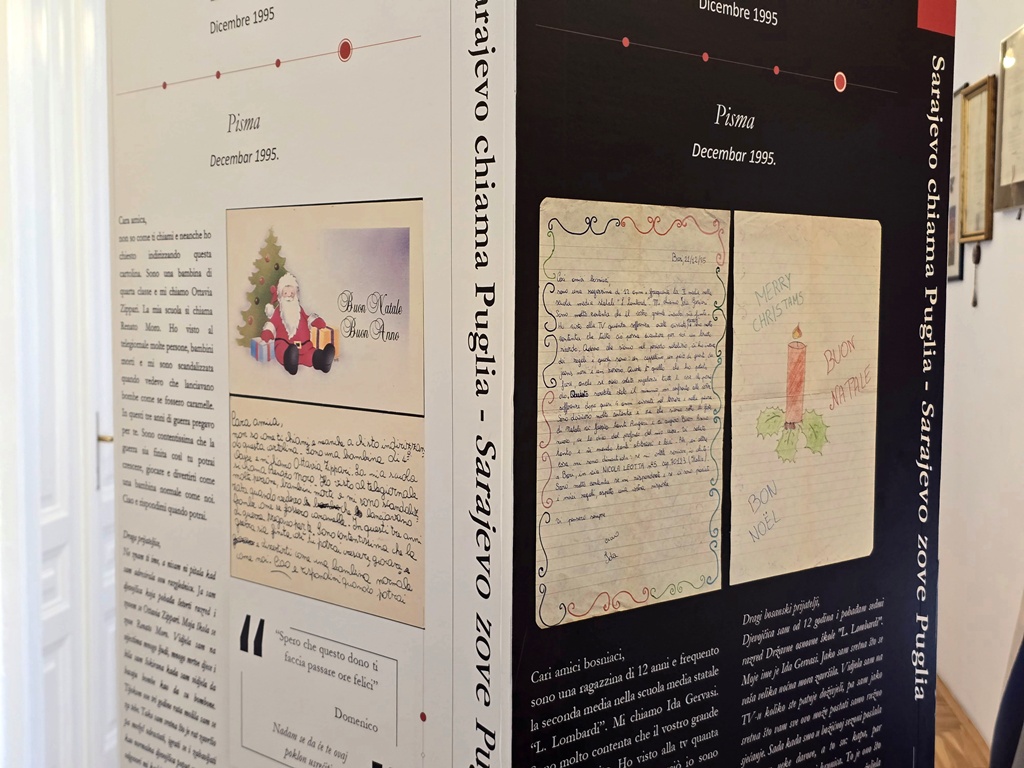
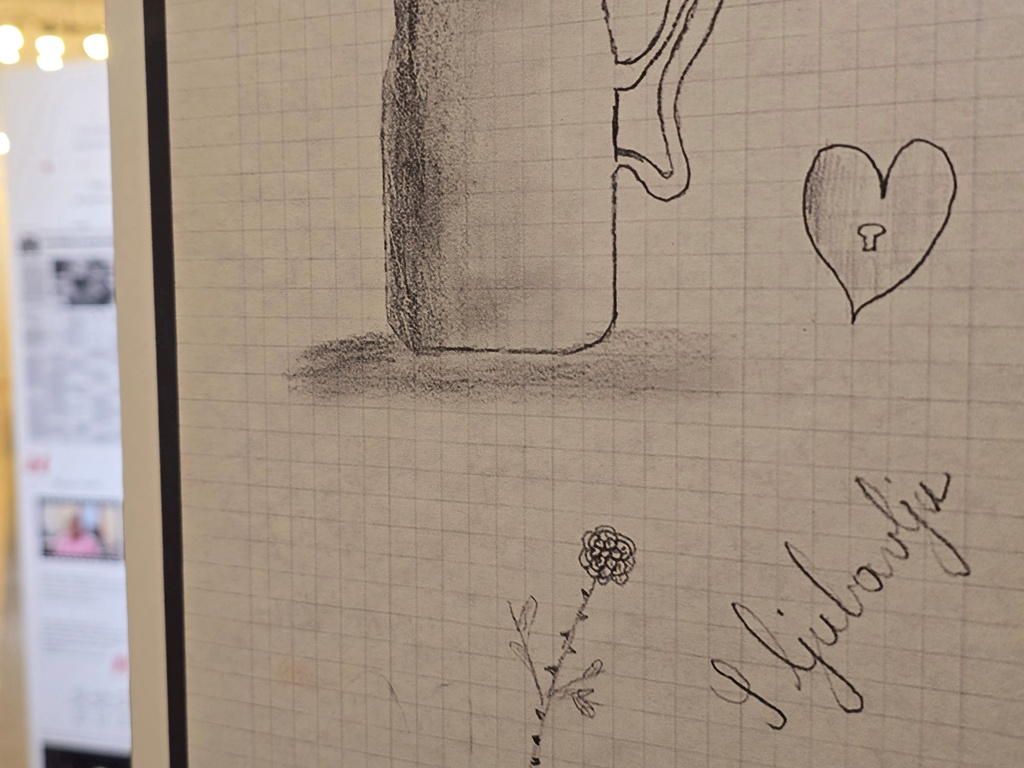
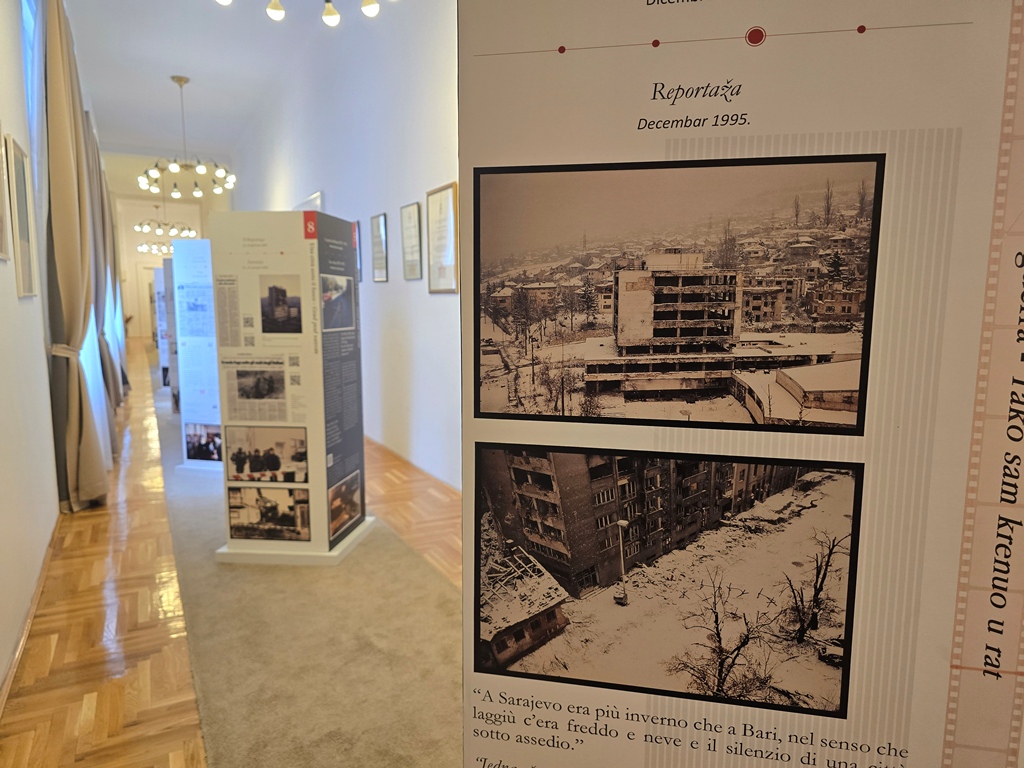
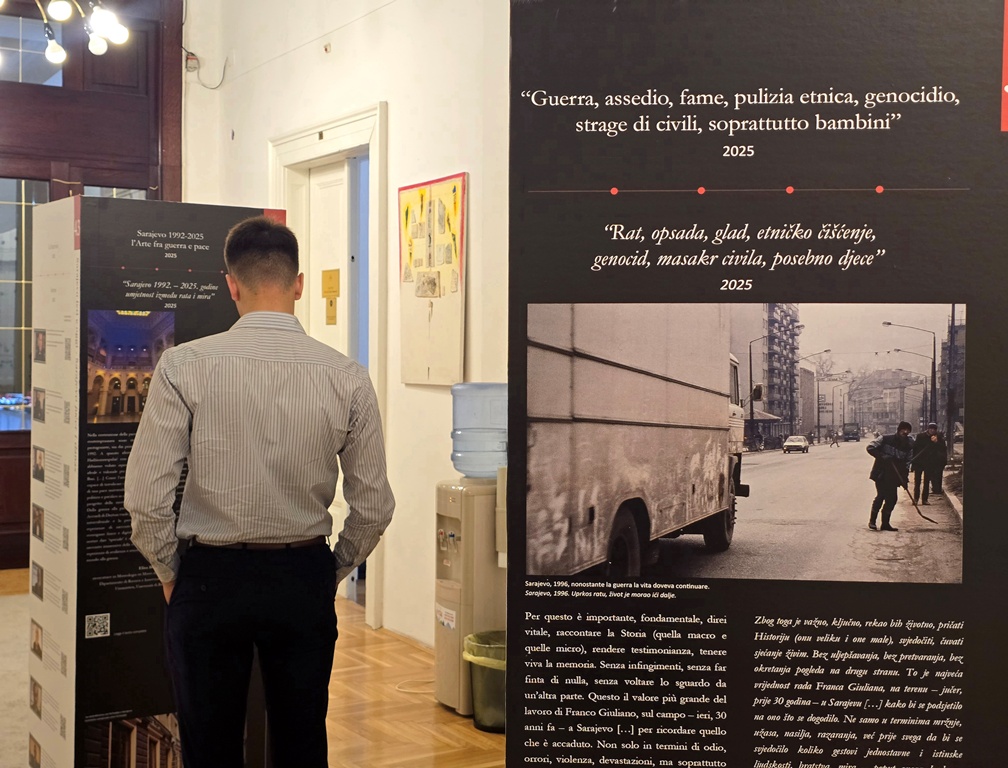
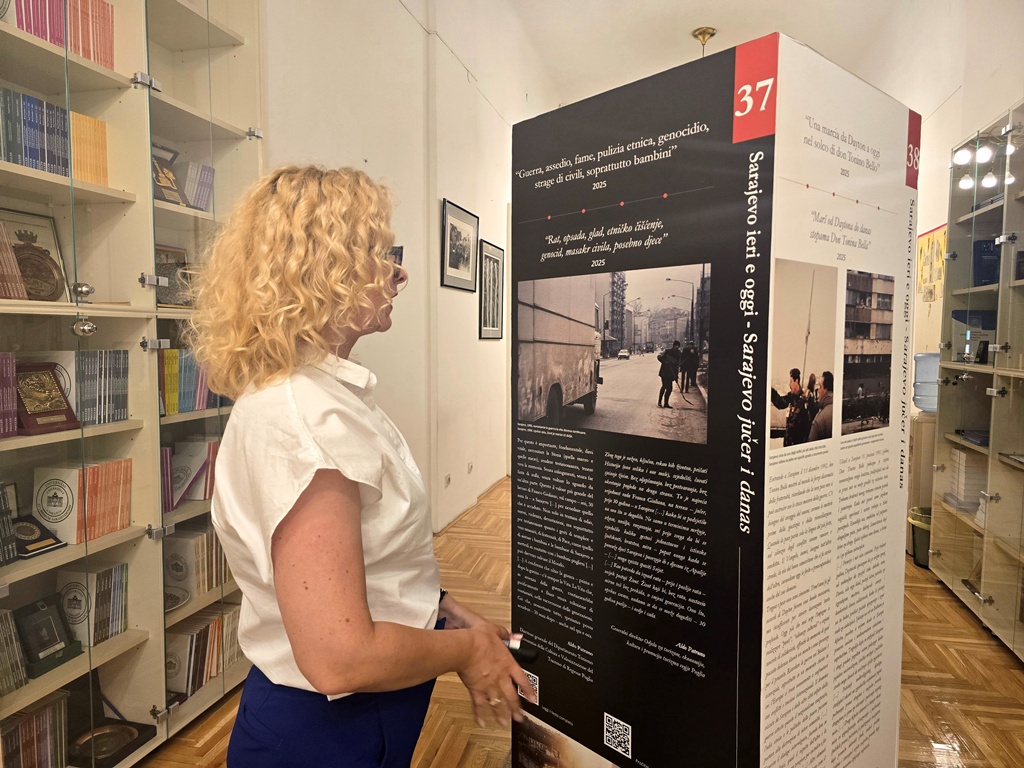
The exhibition “Sarajevo – From War to Peace: Thirty Years Later” bears witness to the power of remembrance and conveys a powerful message of peace.
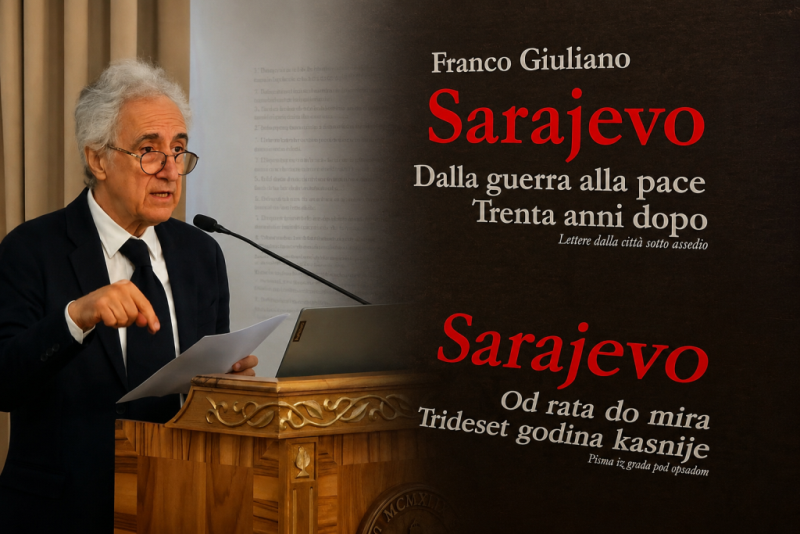


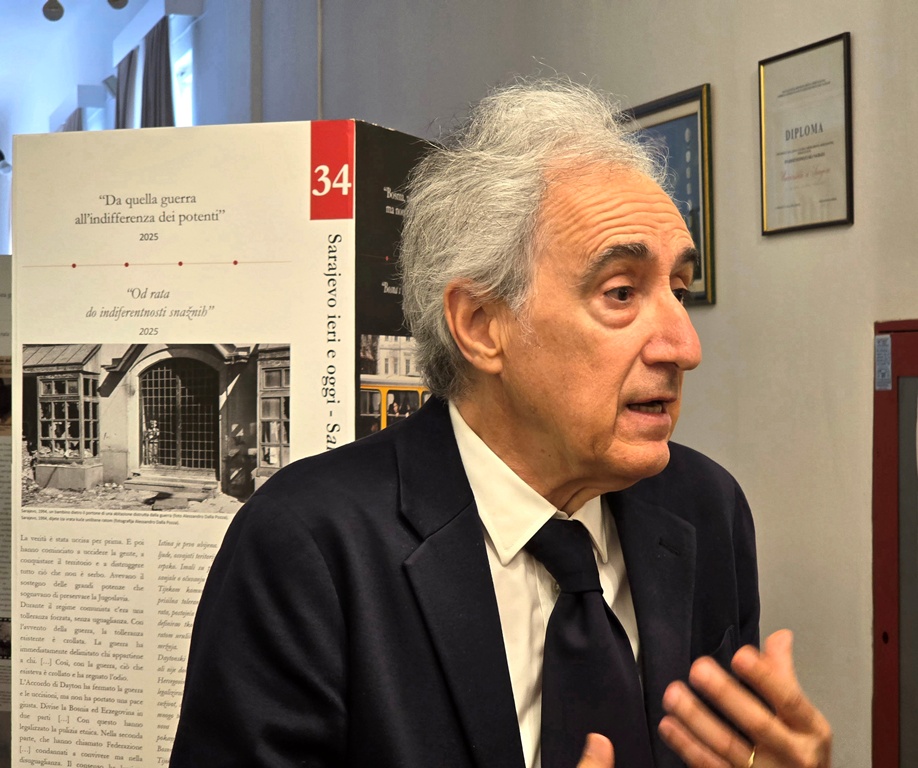
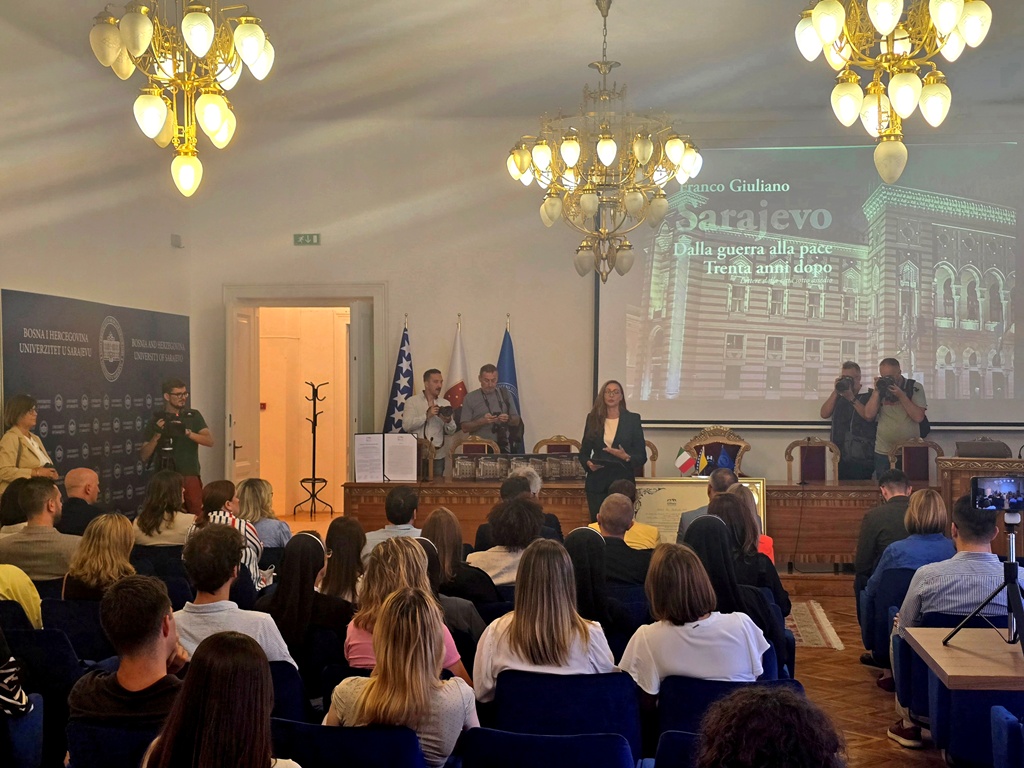
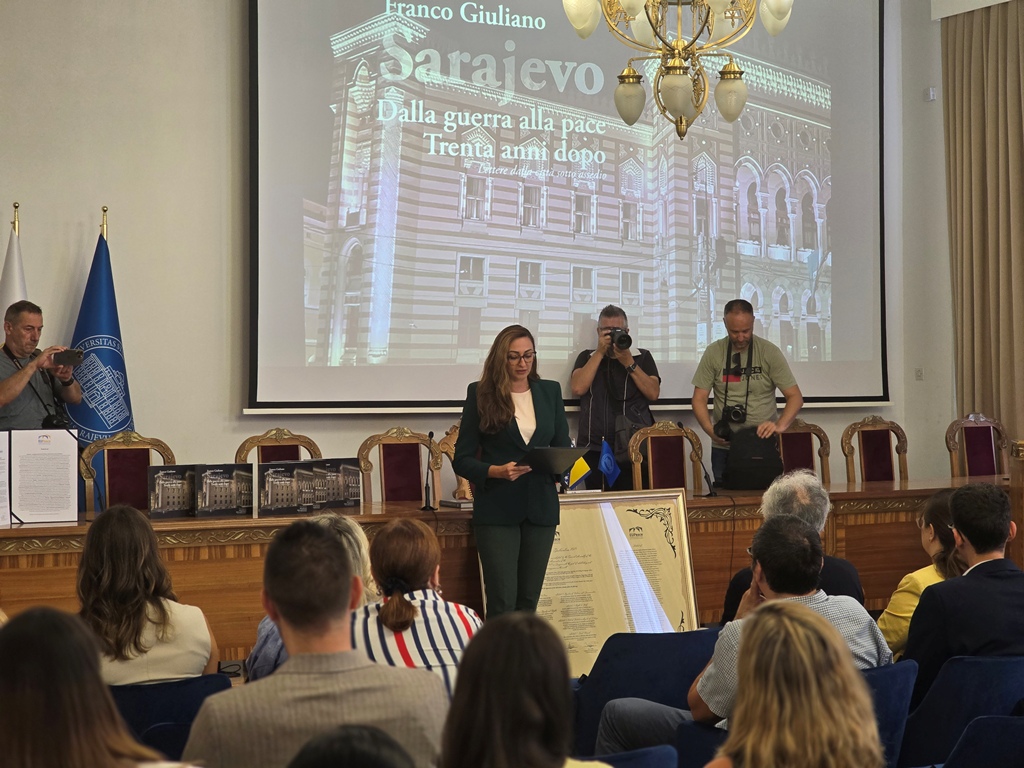
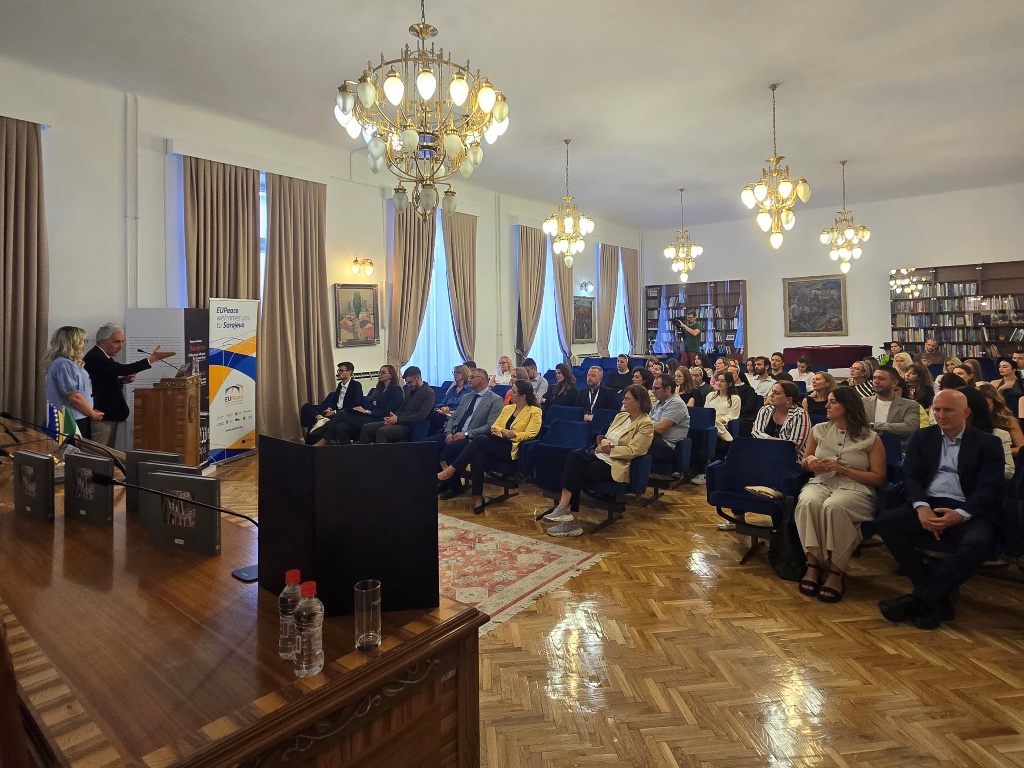
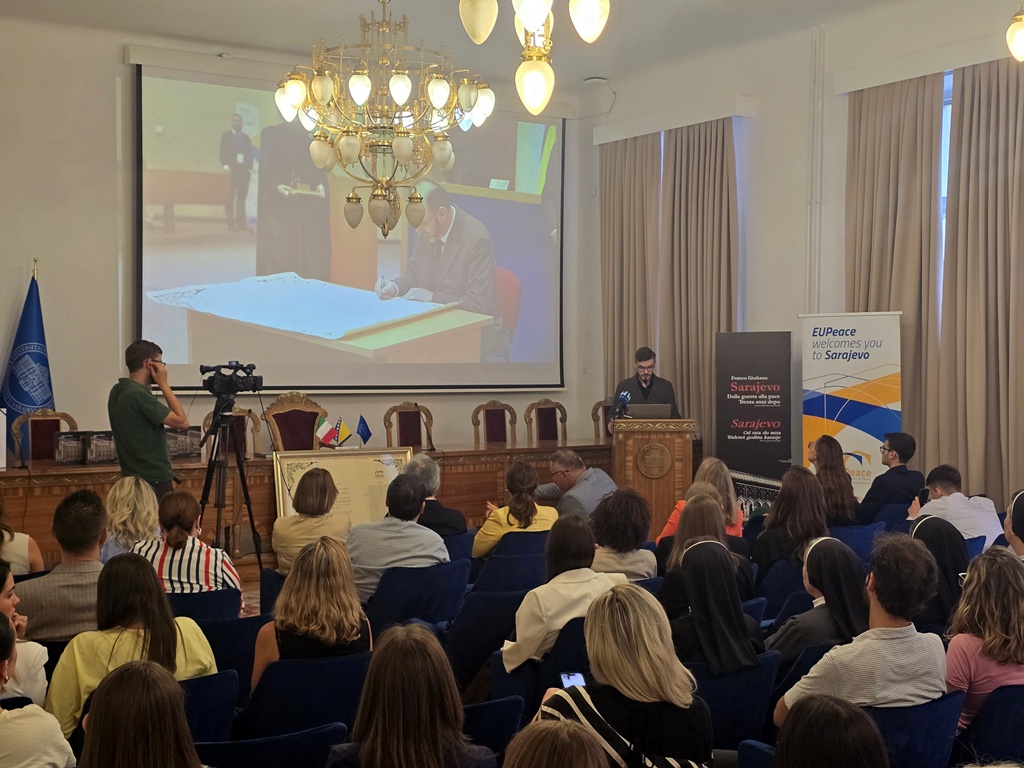
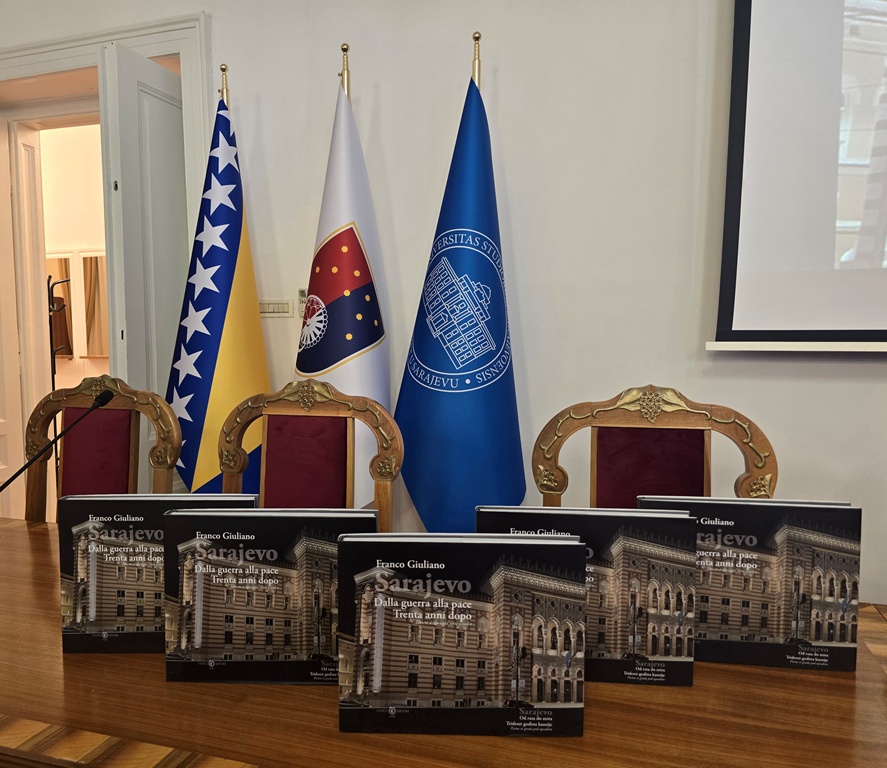
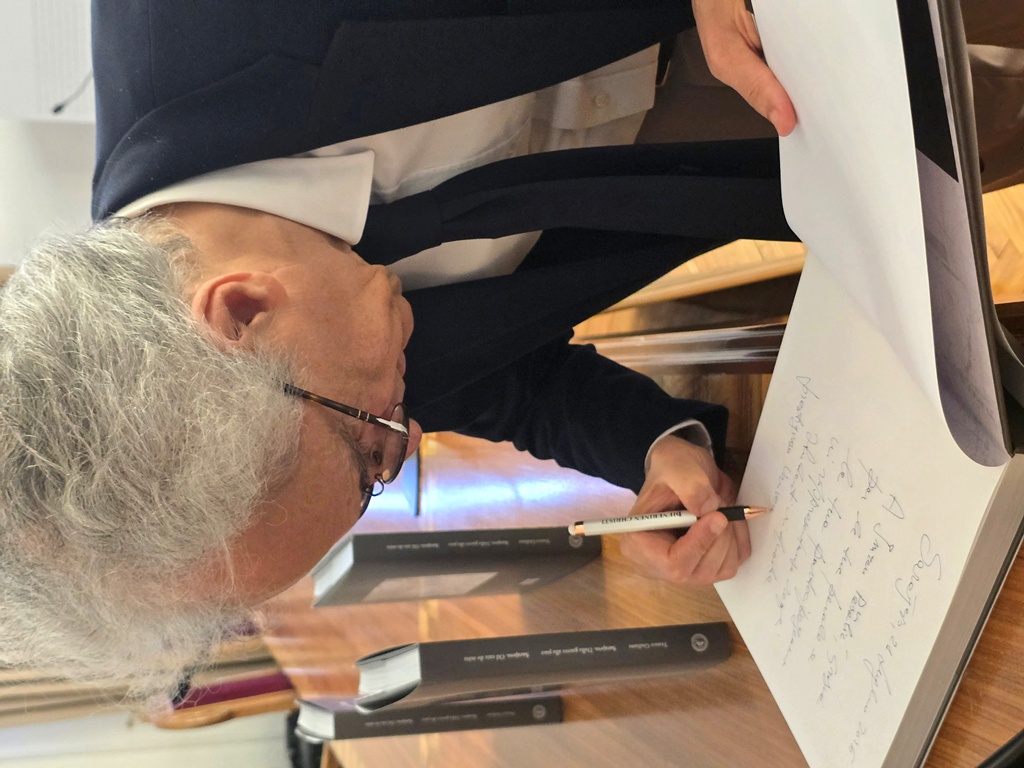
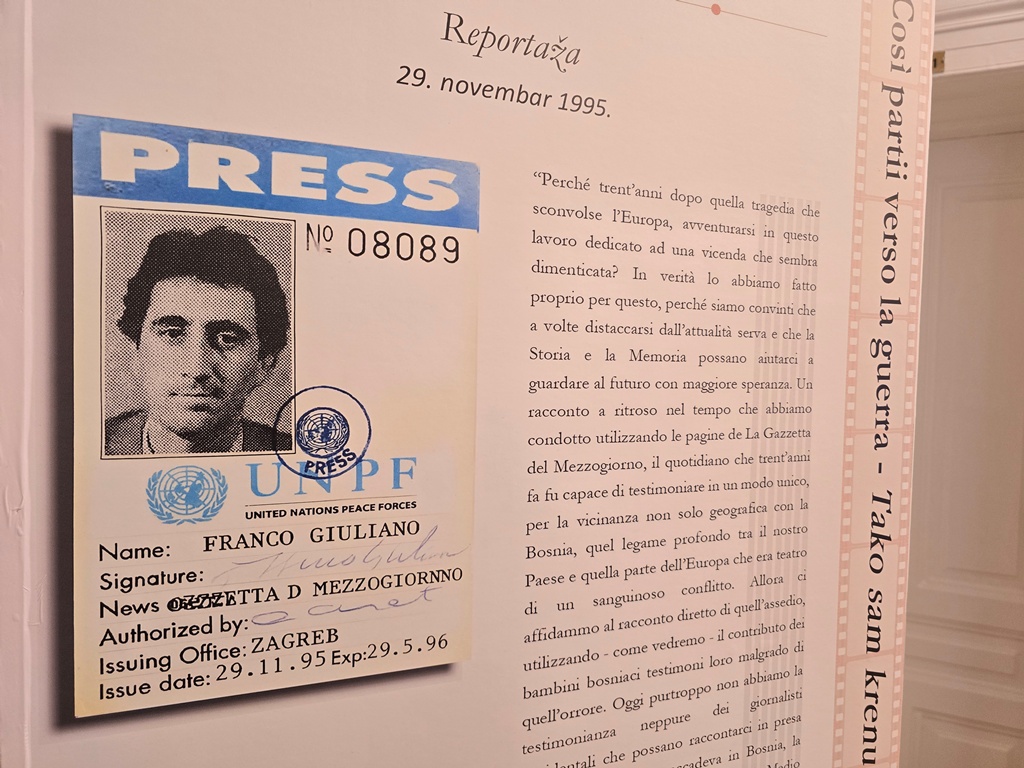
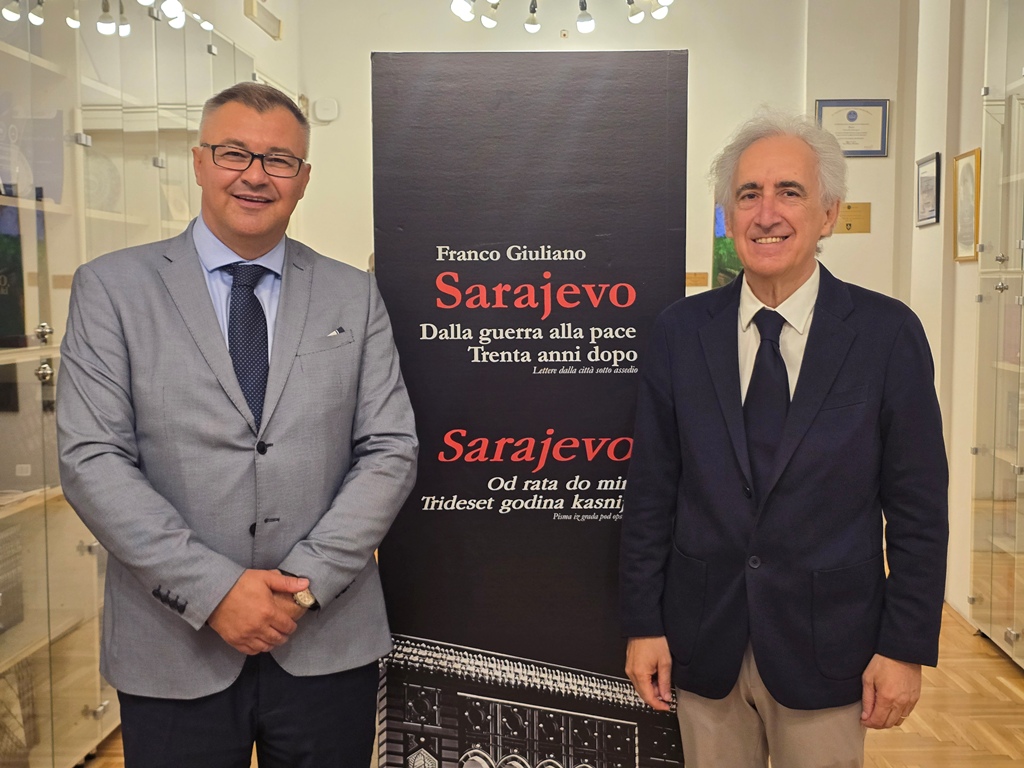
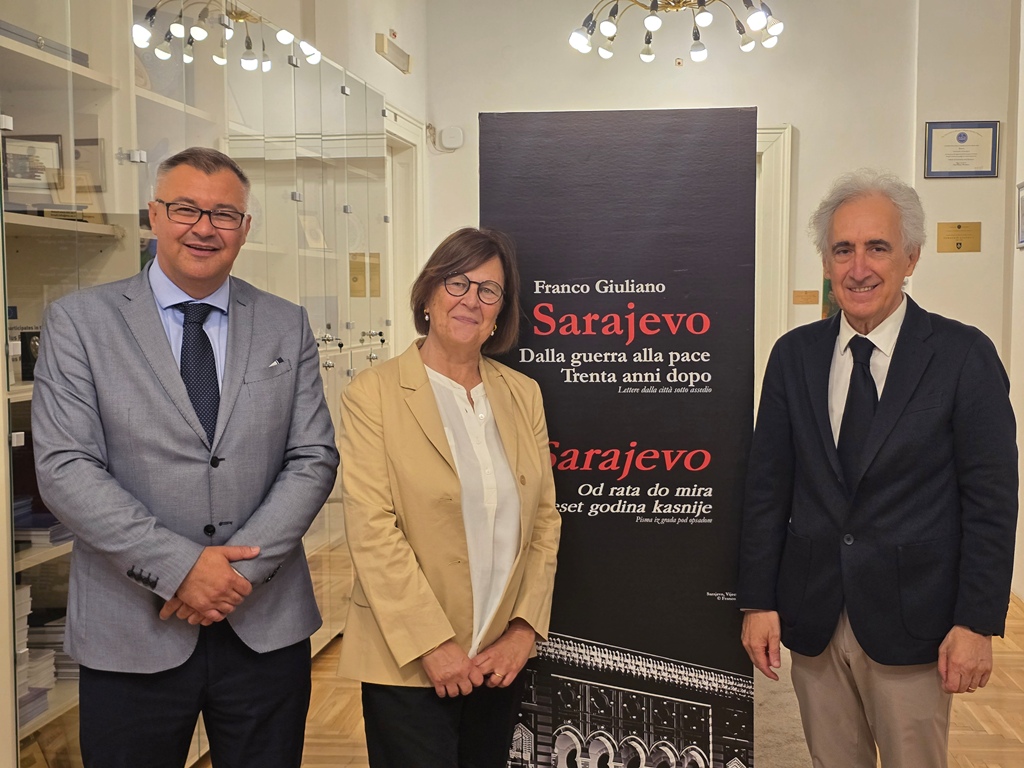
The University of Sarajevo, as host of the cultural and commemorative exhibition “Sarajevo – From War to Peace: Thirty Years Later”, held an official opening ceremony today for the exhibition by its creator and initiator, Franco Giuliano, a journalist, curator and author of the publication of the same title.
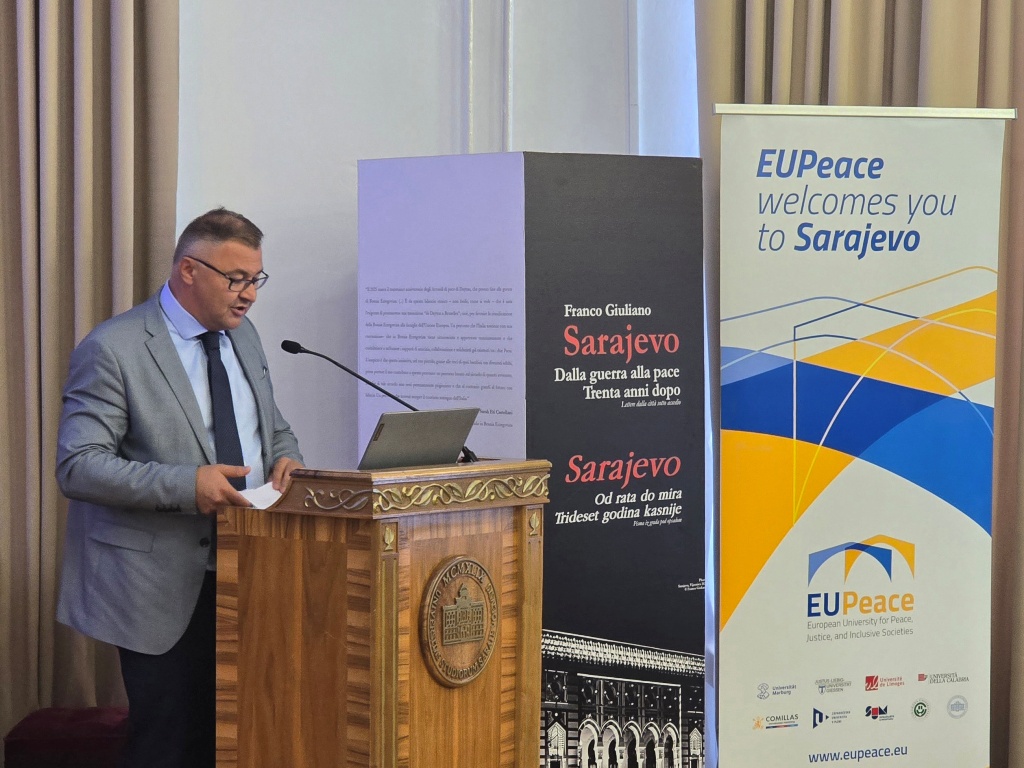
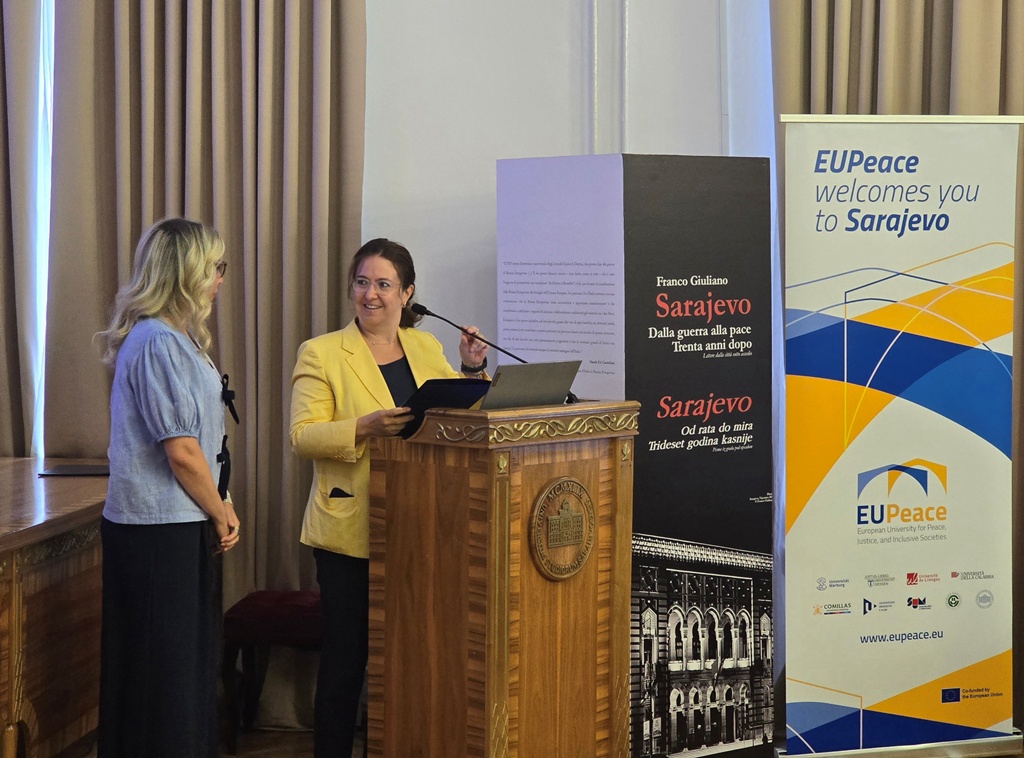
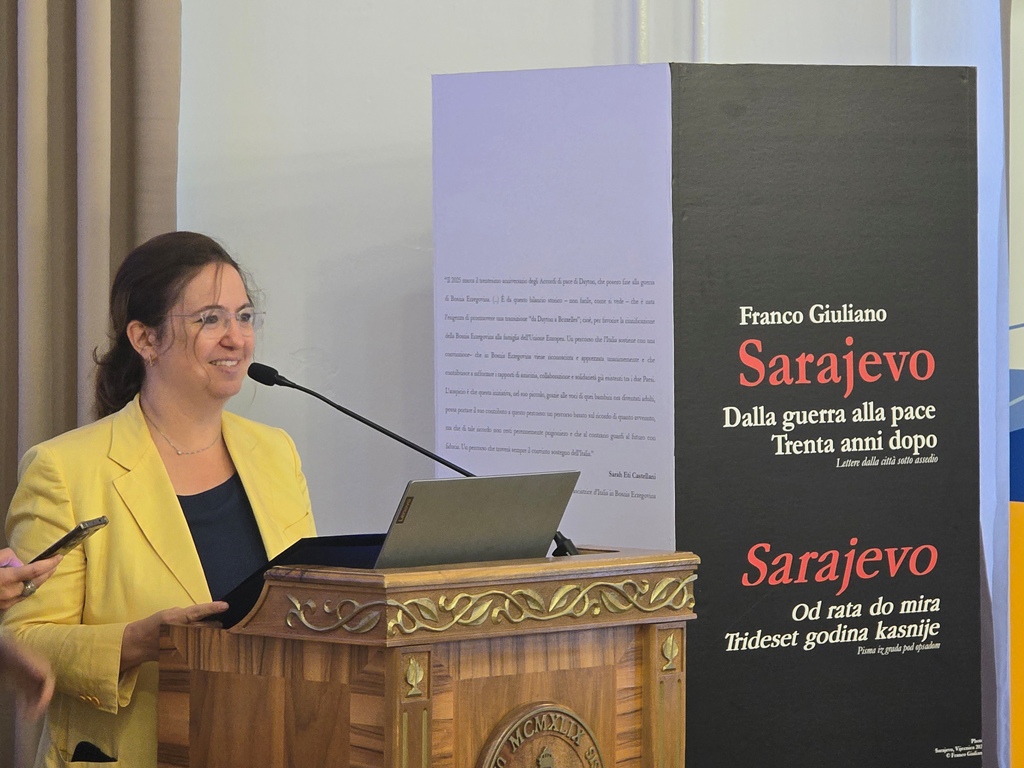
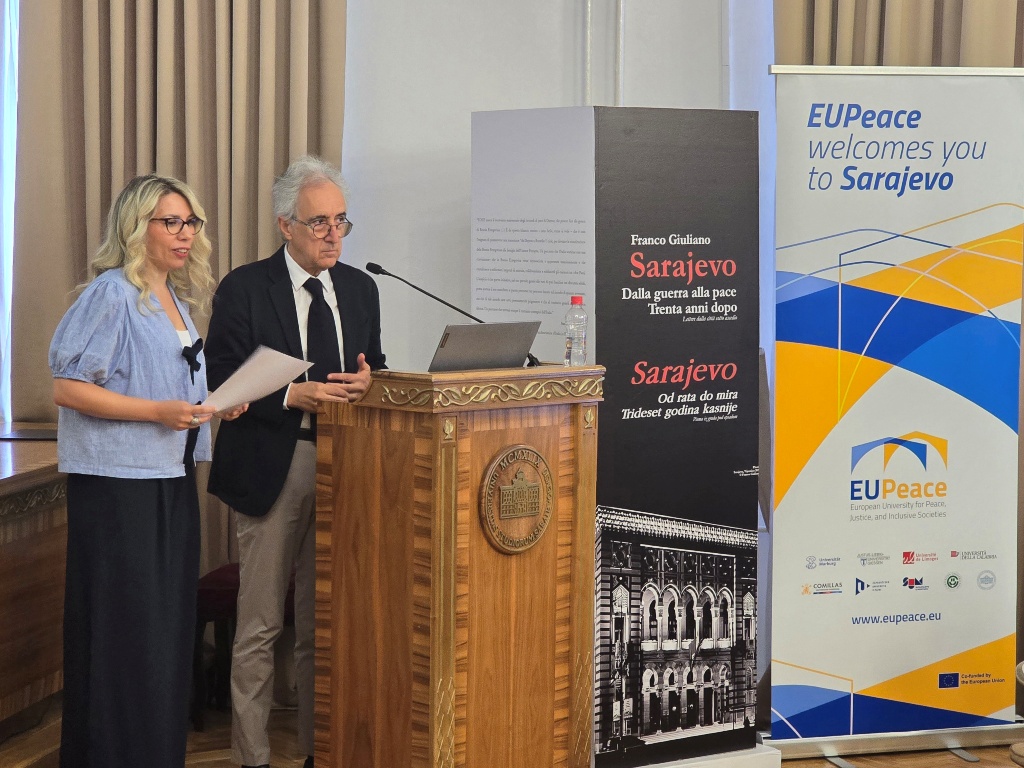
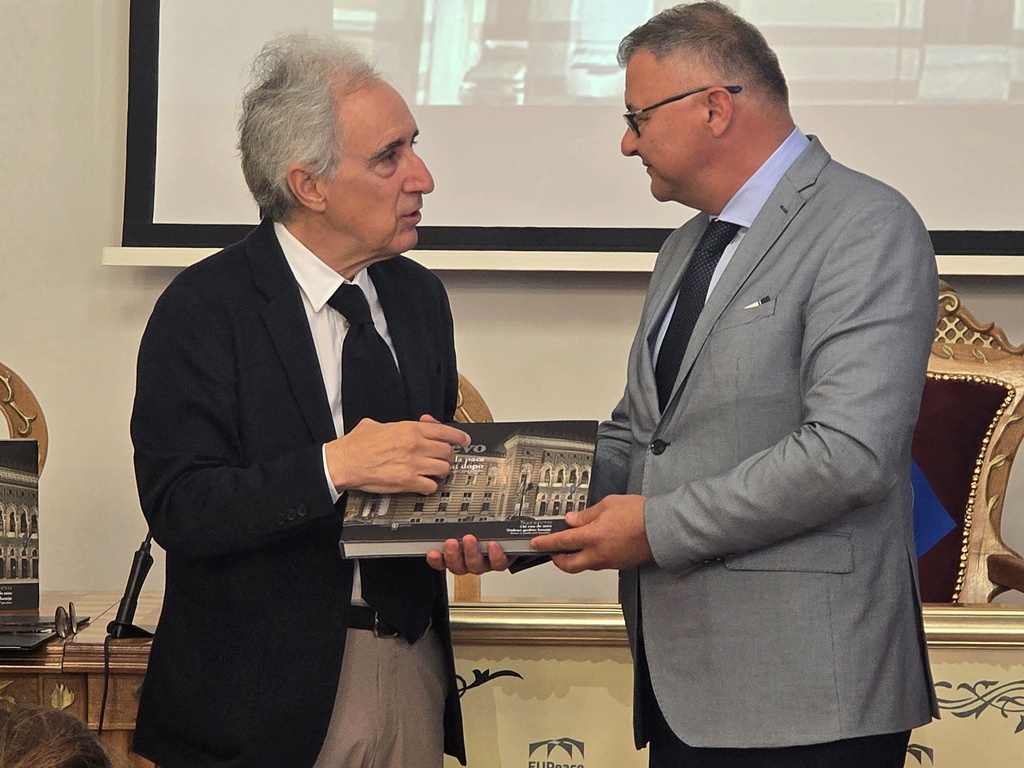
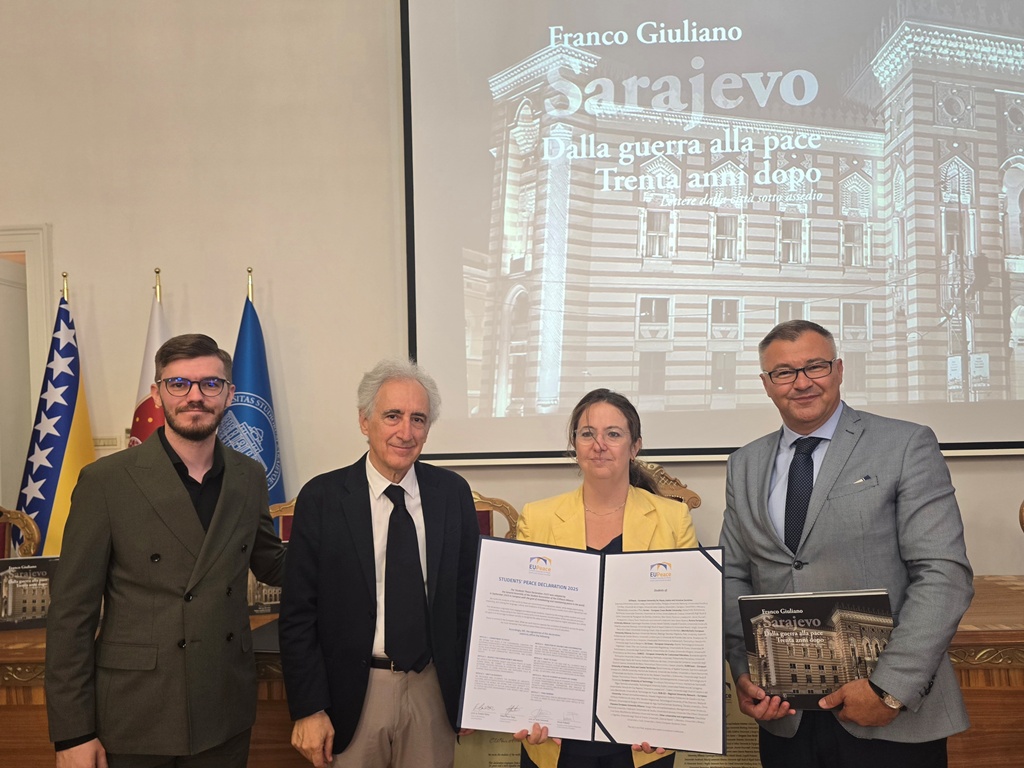
In the presence of and with an address by Franco Giuliano, the exhibition was officially opened by Prof. Dr Kemal Durić, Vice-Rector for International Relations of the University of Sarajevo, and H.E. Sarah Eti Castellani, Ambassador of the Republic of Italy to Bosnia and Herzegovina. The exhibition bears witness to the remembrance, solidarity and friendship between Italy and Bosnia and Herzegovina during and after the war, highlighting the importance of preserving a culture of remembrance, fostering mutual understanding and building lasting peace.
Vice-Rector Prof. Dr Kemal Durić emphasised that the exhibition holds special significance for Sarajevo and the University of Sarajevo. It speaks not only of the remembrance of Sarajevo but also of the tangible solidarity extended by Italy and numerous Italian friends to people who, during those years, sought safety, dignity and hope.
He noted that the University of Sarajevo gladly accepted the opportunity to host the exhibition, not only because of the initiative’s historical and documentary value, but also because of the remarkable energy of its author and his desire to share testimony created thirty years ago while conveying a deeply relevant mission—the mission of peace.
“The message of this exhibition is universal. War has never brought anything good. In every time and every place, it primarily affects innocent people—civilians, children, families and those who did not choose war but nevertheless suffer its consequences. Today, as we look at these testimonies about Sarajevo from thirty years ago, we cannot help but think of the children and civilians suffering in other parts of the world, from Gaza to Ukraine, as well as all the places where war continues to destroy lives, homes, dreams and futures. That is precisely why, through initiatives such as this one, we want to raise our voices and send a clear message: peace is the sacred right of every human being,” Vice-Rector Durić stated.
He added that the University of Sarajevo, as an academic community that developed in a city familiar with both suffering and the strength of civic resistance, has a special responsibility: to educate young people not only by imparting knowledge, but also in the spirit of peace, mutual understanding and responsibility towards the world in which we live.
H.E. Sarah Eti Castellani, Ambassador of the Republic of Italy to Bosnia and Herzegovina, noted that Franco Giuliano’s long-standing connection with Sarajevo and Bosnia and Herzegovina has, from the very beginning, represented much more than journalistic work and the collection of testimonies. Thanks to his persistence, sensitivity and efforts to collect letters written by the children of Sarajevo during the siege, it is now possible to revisit one of the most difficult periods in the city’s history and follow the life journey of a generation that grew up during the war and is now, thirty years later, building its future.
Speaking about the significance of the exhibition, Ambassador Castellani stressed that it comes at a time of increasing tension and instability around the world. The collected testimonies demonstrate the extent to which war destroys societies and leaves profound consequences, particularly for children and young people. She emphasised that remembering besieged Sarajevo is not merely about recalling the past, but also serves as a warning for the present and the future.
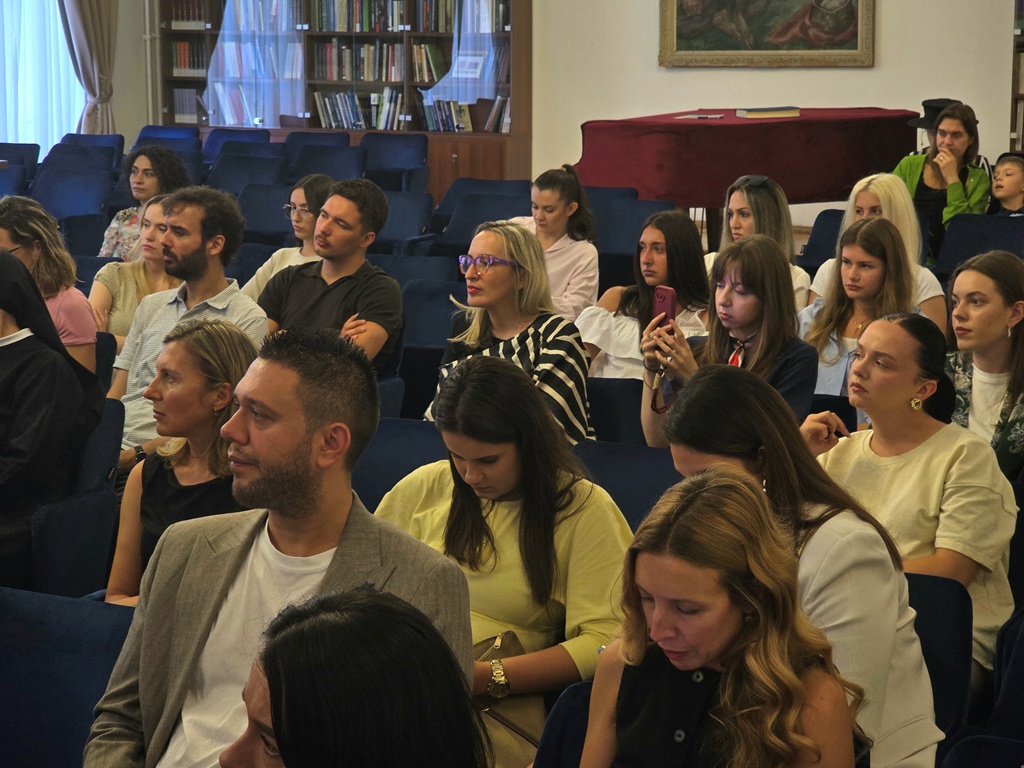
She added that today’s responsibility is to build bridges between people and nations and, in particular, to strengthen Bosnia and Herzegovina’s ties with the European family, emphasising the importance of beginning this process with younger generations. This, she explained, is precisely why the exhibition has been staged at the University of Sarajevo.
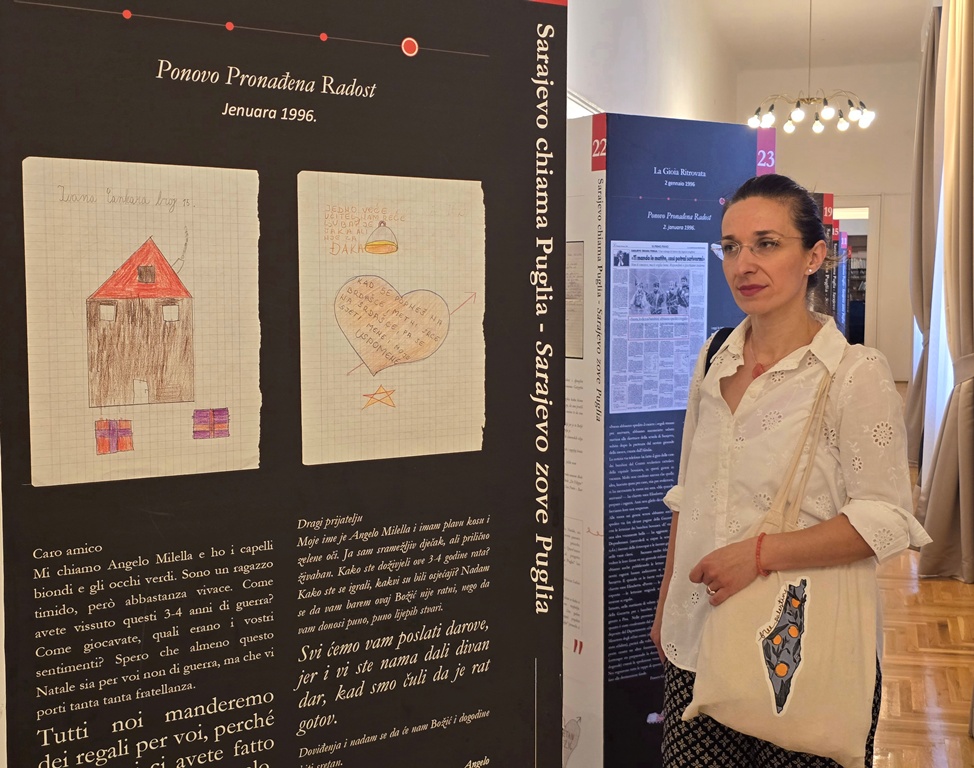
Thirty years after the end of the war, the voices of children who expressed their fears, hopes and dreams through letters during the siege of Sarajevo have once again been given a platform to bear witness. “Sarajevo – From War to Peace: Thirty Years Later”, a cultural and commemorative exhibition by Italian war correspondent Franco Giuliano, is a powerful reminder that war must neither be forgotten nor repeated.
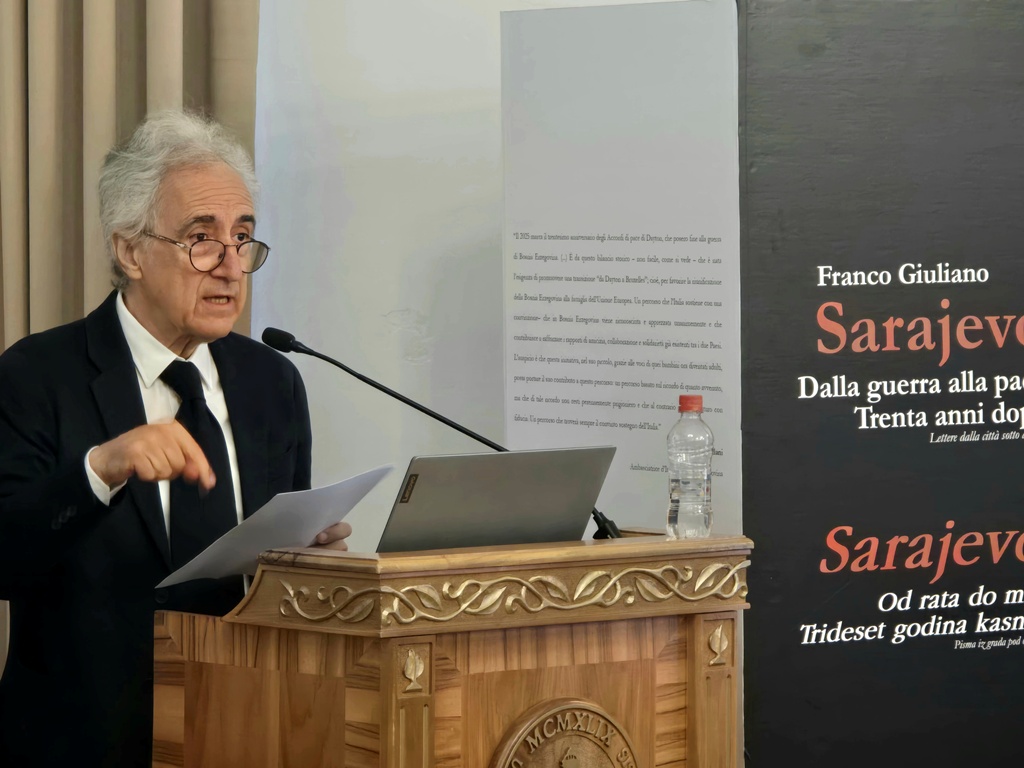
Franco Giuliano recalled that he first came to Sarajevo in 1995 as a war correspondent.
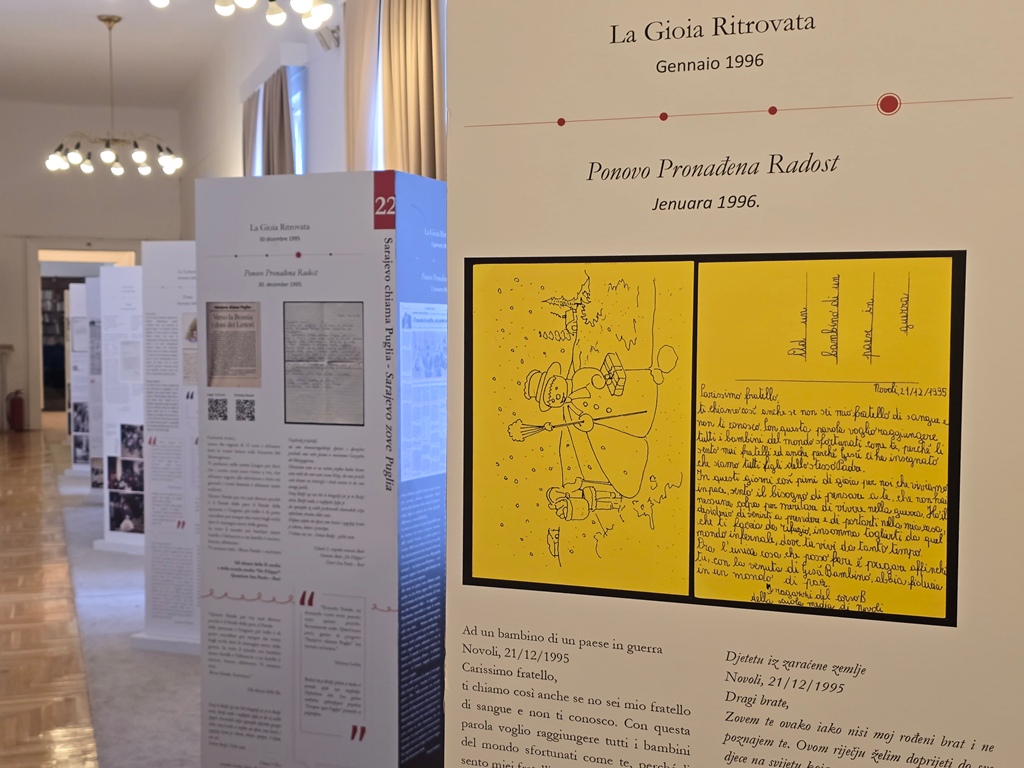
“At that time, the task of all of us journalists was to report how many shells had fallen on the city and how many people had been killed. However, while staying at the Catholic School Centre, I met the pupils and came up with the idea of telling the story of the war through their voices and their letters. I wanted us to convey Sarajevo’s experience in a different way—through the words of children,” Giuliano emphasised.
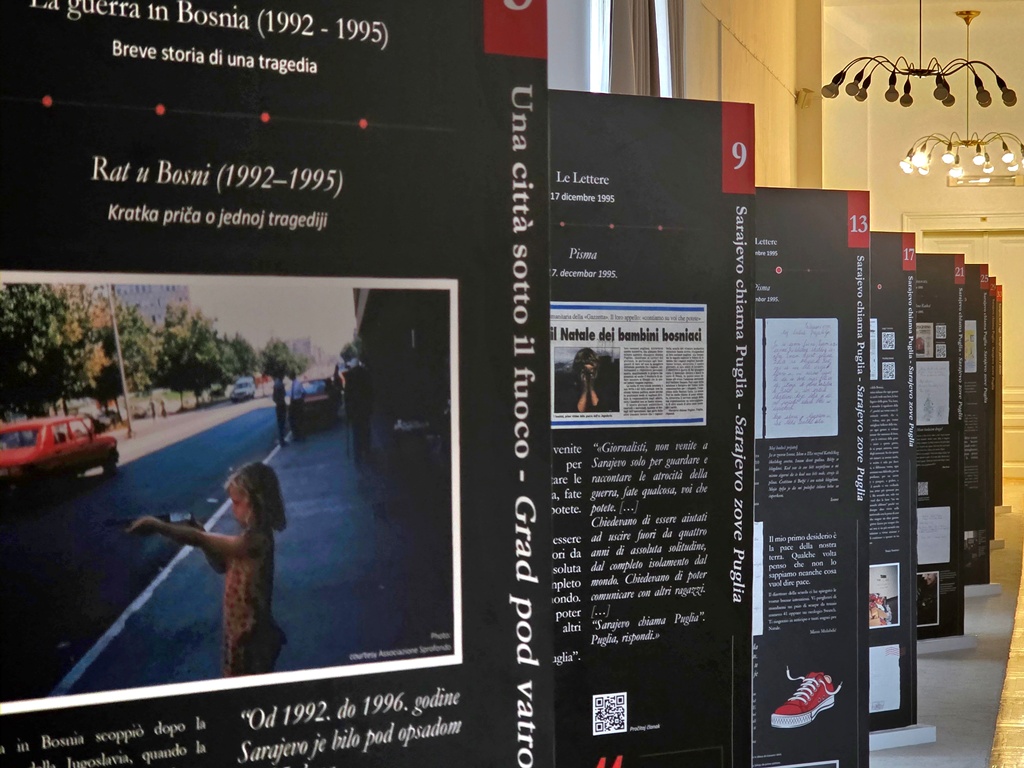
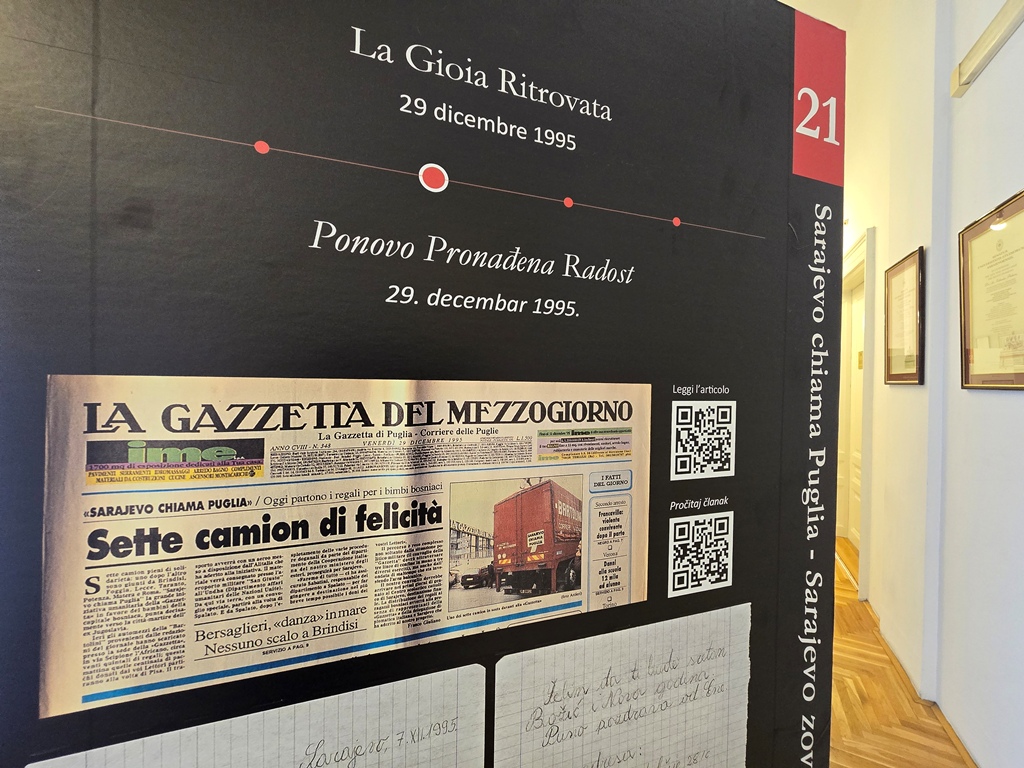
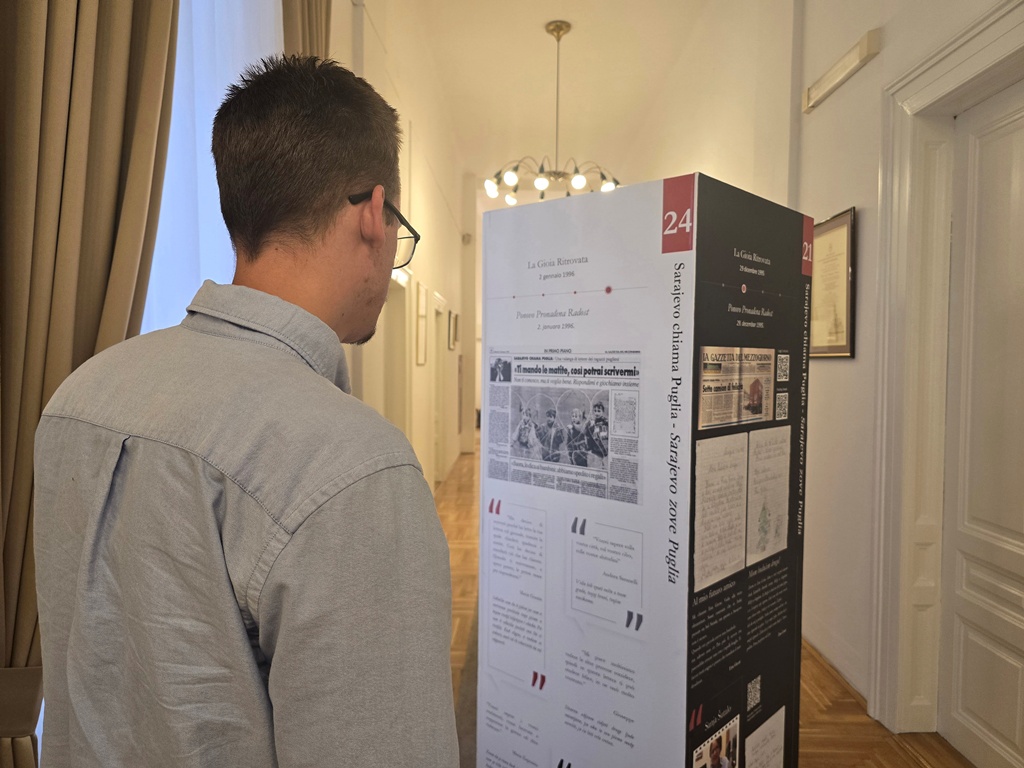
The pupils’ letters were published in the Italian newspaper La Gazzetta del Mezzogiorno, where he worked at the time, to give the Italian public an insight not only into wartime statistics but also into the emotional reality of children’s lives in besieged Sarajevo.
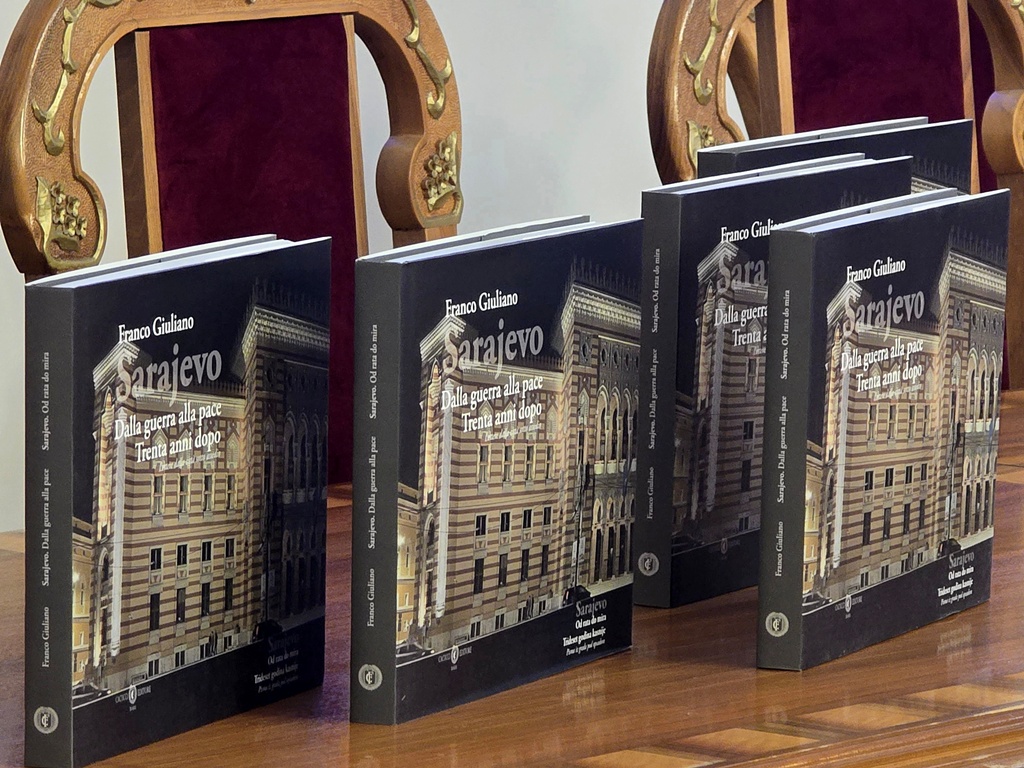
For three decades, the letters remained preserved in a drawer in his newsroom. It was only after his retirement that he decided to reopen and publish them in a book containing the children’s letters in Italian and Croatian, along with interviews and testimonies collected during the war.
Thirty years later, Giuliano located five women who had written those letters as pupils of the Secondary Medical School at the Catholic School Centre. Their stories are now an integral part of the exhibition, and visitors can use QR codes to watch and listen to their testimonies.
Speaking about how the exhibition came into being, Giuliano explained that the idea originated in 2017, at a time when the world had not yet been confronted with the present-day wars in Ukraine and Gaza.
“I did not want these testimonies to remain locked away in a drawer. I wanted them to serve as a lasting warning that what happened in Sarajevo must never happen again, anywhere. Unfortunately, today we see that wars continue to take place,” Giuliano said.
He particularly emphasised that the exhibition should remain a warning to present and future generations.
“Younger people who, fortunately, have not experienced war must know what happened so that they can become guardians of memory and help ensure that such tragedies are never repeated. Every war eventually ends, just as the war in Sarajevo ended. Today’s wars will also end, but it is important that we preserve these memories, speak about them and, through messages of peace, protect what we have managed to build after everything we endured,” Giuliano concluded.
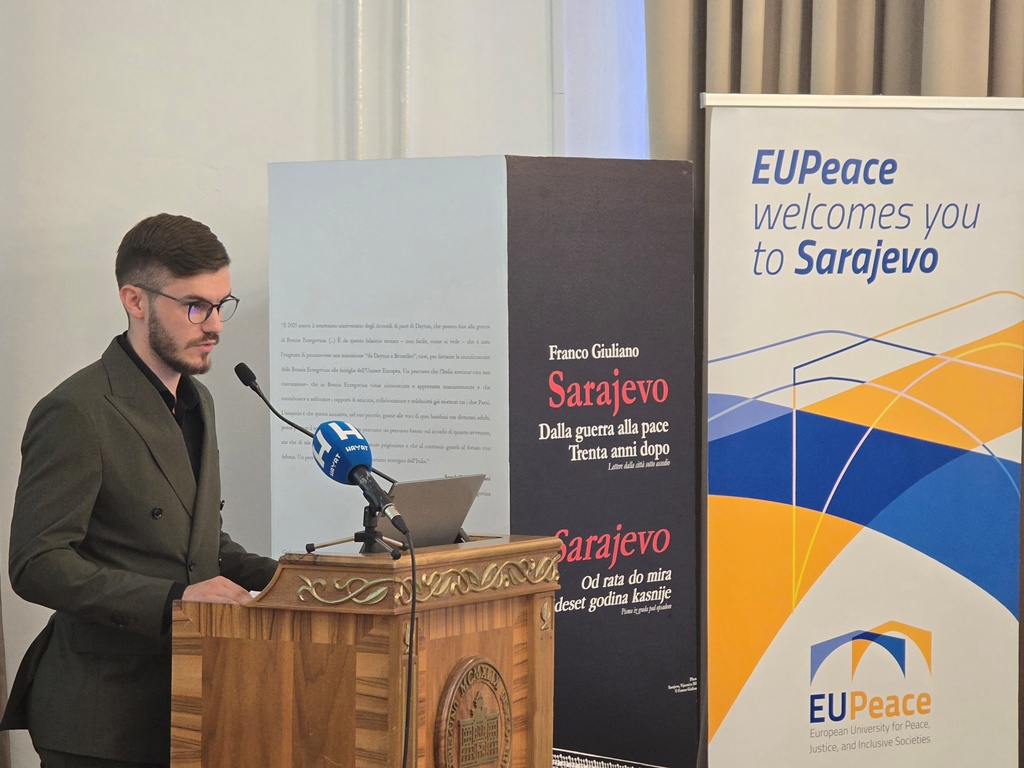
Imran Pašalić, former President of the Student Parliament of the University of Sarajevo, who held the position from 2023 to 2025, spoke of Sarajevo as a city that survived thanks to its citizens and friends who refused to allow it to disappear. He noted that many children were deprived of their childhood during the war, when sweets were replaced by bullets and shells. Nevertheless, despite everything, neither his generation, their parents nor the generations before them ever forgot how to smile.
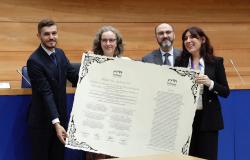
Speaking about the role of young people in peacebuilding, Pašalić referred to the Student Declaration for Peace, an initiative launched as part of the activities of the EUPeace Alliance with the aim of sending a message of peace from Sarajevo to people currently experiencing the horrors of war. He stressed that the students wanted to tell people in Ukraine, Palestine, Yemen, Sudan and other countries that they understood their suffering and wished to be their voice in calling for peace.
He recalled that the Declaration was first signed on 17 September last year at the Parliamentary Assembly of Bosnia and Herzegovina, when 103 universities from around the world endorsed it. Today, it has more than 160 signatories.
He emphasised that young and educated people have a responsibility to send messages of peace and ensure that their voices are heard by decision-makers. He warned that schools and hospitals continue to be bombed and innocent people continue to lose their lives in wars. He concluded that Sarajevo and Bosnia and Herzegovina, as well as Palestine and Ukraine, should serve as lessons for everyone—and that peace is not a destination, but a way of life.