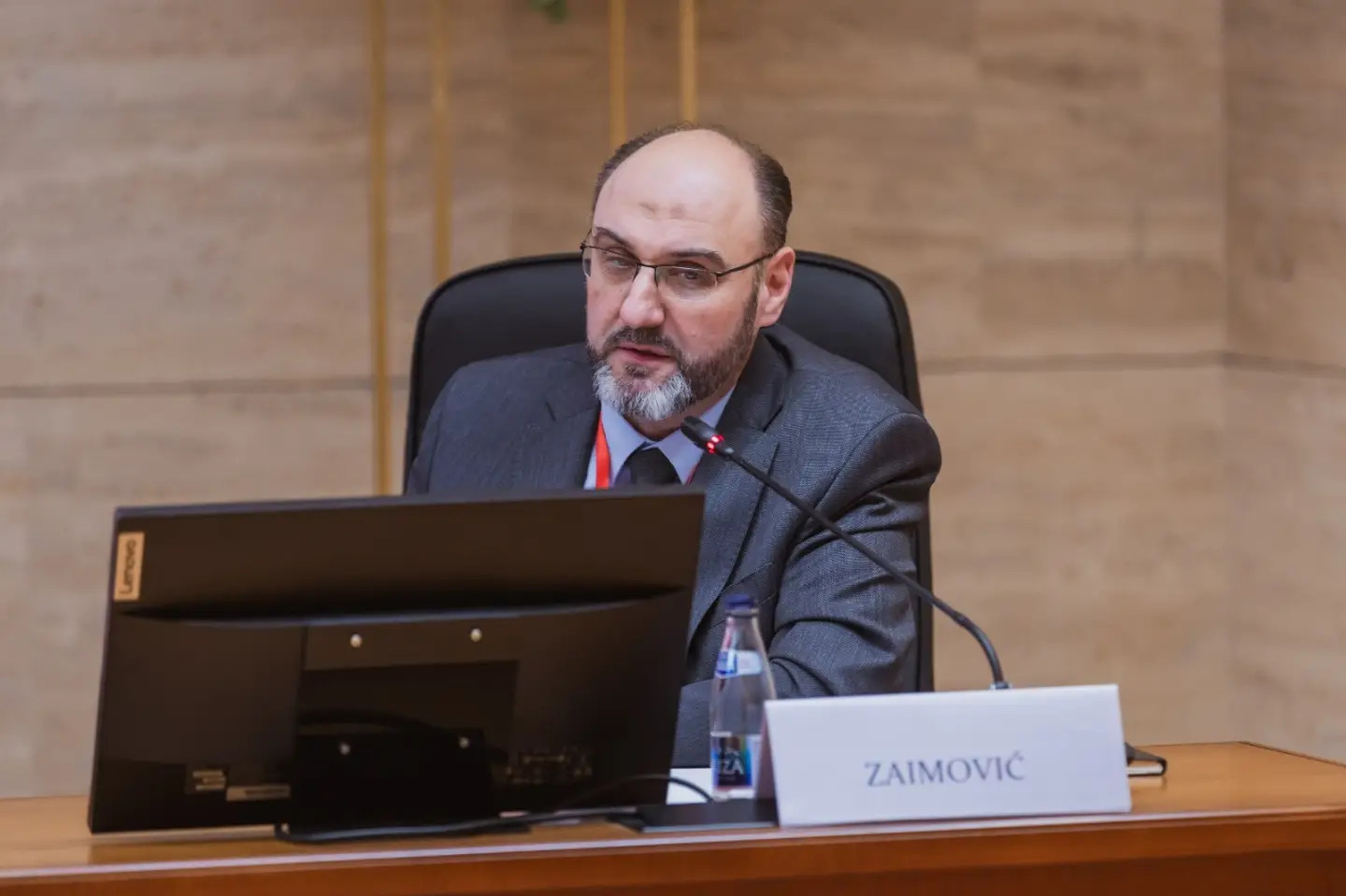
University of Sarajevo Rector, Prof. Dr. Tarik Zaimović, keynote speaker at the 10th Joint Scientific Conference of the Berlin Process
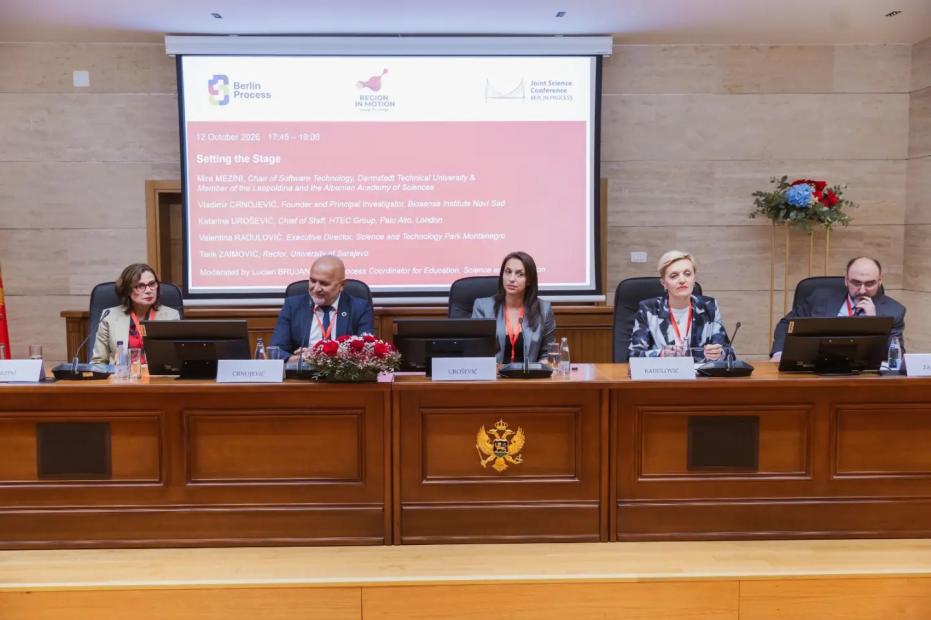


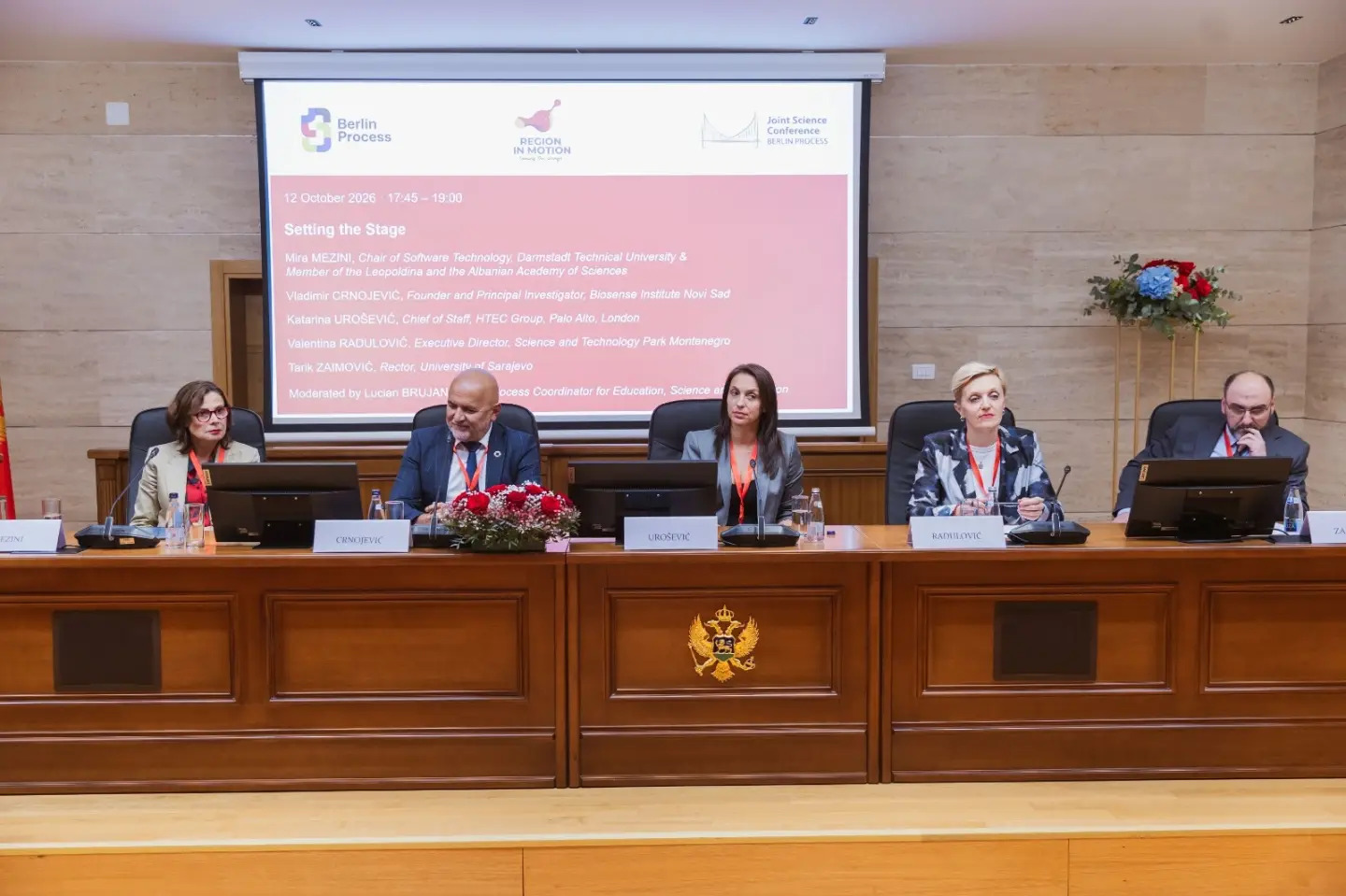
University of Sarajevo Rector, Prof. Dr. Tarik Zaimović, participated in the 10th Joint Scientific Conference of the Berlin Process, held from 12 to 14 October 2026 in Podgorica, under the title "Western Balkans in Europe: People – Innovation – Transformation." As one of the keynote speakers in the "Setting the Stage" session, he contributed to opening an expert discussion on the current state and future prospects for the development of science, education, research, and innovation in the Western Balkans.
Speaking about his experience leading the University of Sarajevo, Rector Zaimović presented a vision for the university's development over the coming decades, based on three interconnected commitments: research as the core of university activity, education focused on competency development, and organizational improvement of the university, including an admission policy aligned with its mission and capacities. This approach entails a return to the fundamental principles of the Magna Charta Universitatum—institutional autonomy, the inseparable link between teaching and research, and freedom of research and education, coupled with openness to dialogue and the rejection of intolerance. He emphasized that scientific research must be more strongly integrated with teaching through student involvement and talent development. Beyond publishing research results, their value should be recognized through contributions to educational quality, the development of research teams, and the long-term strengthening of the University. He particularly stressed the importance of creating an academic environment where students actively participate in research, develop independence, and contribute to the creation of new knowledge.
He stated that study programmes, while preserving the breadth and value of the concept of universitas studiorum, should develop the ability to apply knowledge, critical thinking, independent research, and responsible action. Such a commitment requires appropriate human resources, infrastructure, and teaching capacities, as well as teaching and evaluation methods that enable the genuine achievement of planned learning outcomes. Addressing organizational improvement of the university, Rector Zaimović highlighted the need to align organizational structures, simplify procedures, and clarify responsibility distribution to establish more efficient academic and administrative processes. An integral part of this approach is determining objectively based and optimal enrollment quotas, aligned with the University's mission, its teaching and research capacities, and long-term societal needs.
Connecting organization, processes, and admission policies should enable more responsible resource use, higher-quality student support, and stronger integration of education and research. He stated that university organization and institutional capacities must enable high-quality, research-based education, and that such education should develop students' abilities and competencies. Highlighting demographic, financial, and administrative challenges, he advocated for predictable multi-year funding, investment in young researchers, and institutional autonomy accompanied by accountability. He particularly emphasized the importance of regional cooperation through joint doctoral programmes, shared use of research infrastructure, and projects connecting universities, businesses, and public institutions, with the aim of creating sustainable opportunities for talent development and strengthening the region's scientific capacities.
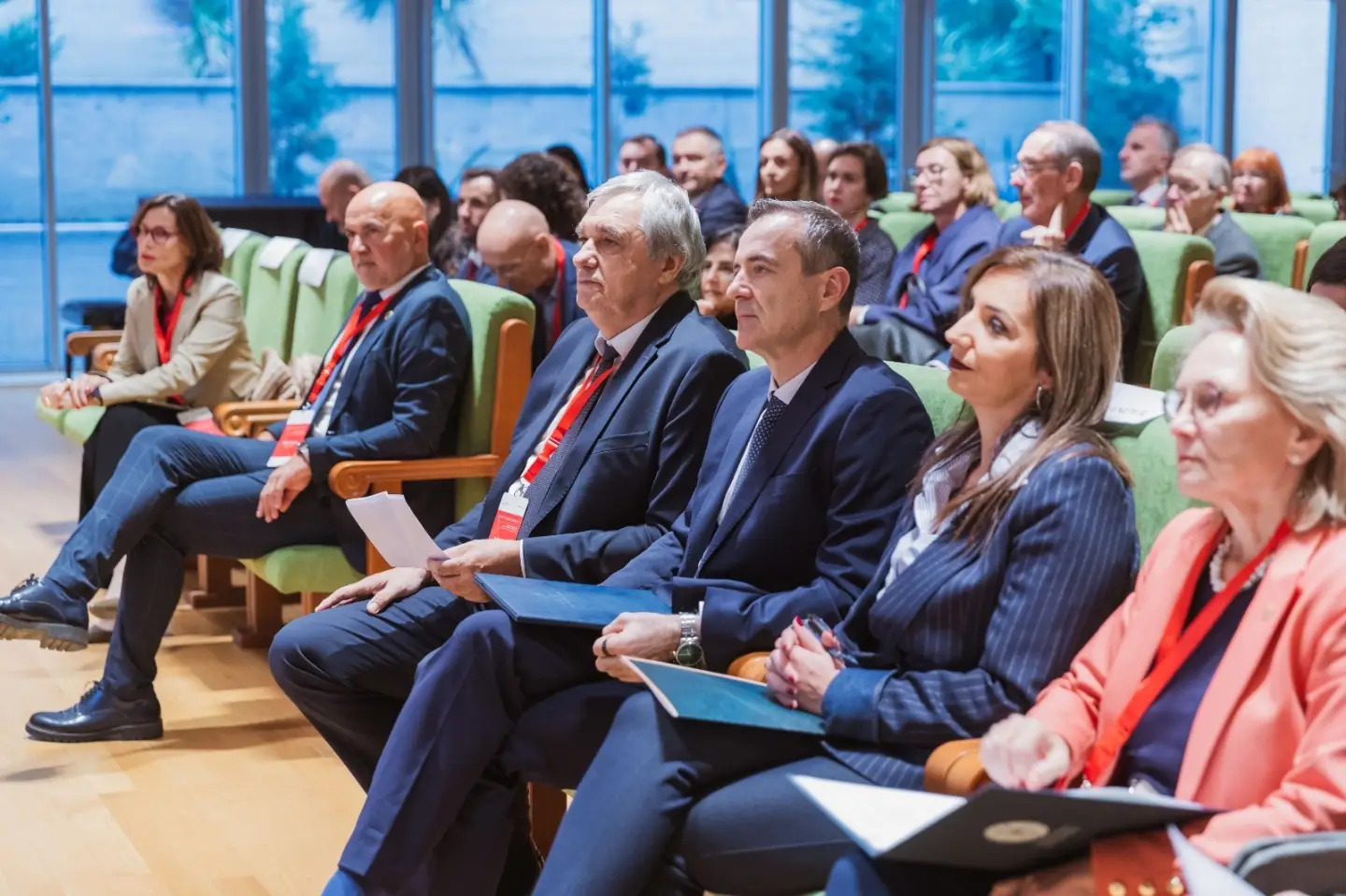
Through his participation in the 10th Joint Scientific Conference of the Berlin Process, the Rector of the University of Sarajevo, Prof. Dr. Tarik Zaimović, contributed to the discussion on development directions for higher education and science in the Western Balkans. His messages on strengthening research capacities, improving educational quality, and intensifying regional academic cooperation highlight the importance of building universities that can respond to societal needs and actively participate in the European research and education area. The 10th Joint Scientific Conference of the Berlin Process, held under the title "Western Balkans in Europe: People – Innovation – Transformation," gathered more than 60 representatives of academic, scientific, and research institutions from 16 countries. Organized by the German National Academy of Sciences Leopoldina, the Montenegrin Academy of Sciences and Arts, and the University of Montenegro, the conference was dedicated to key challenges and development prospects for higher education, innovation, and scientific research, with special emphasis on regional cooperation and stronger integration of the Western Balkans into the European research and education area.