EUPeace Doctoral Mobility Fellow Delivers Lecture on Developmentalism and Economic Governance at the Faculty of Political Sciences
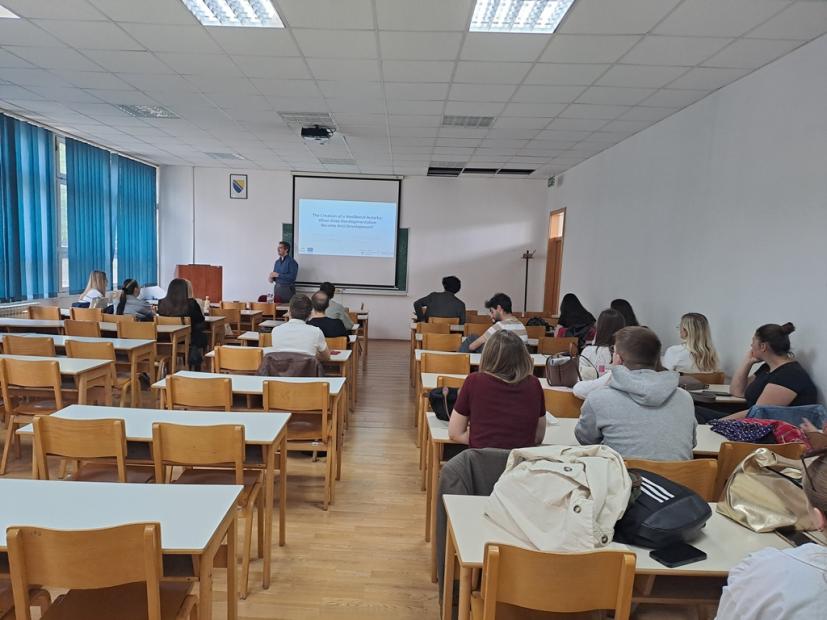


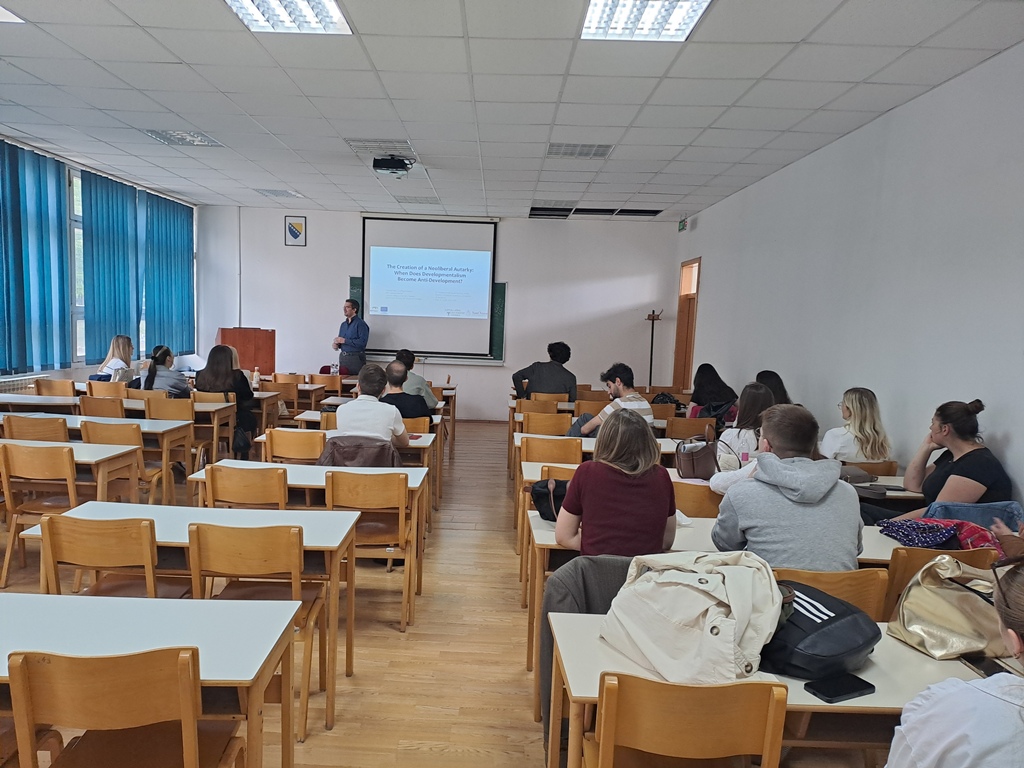
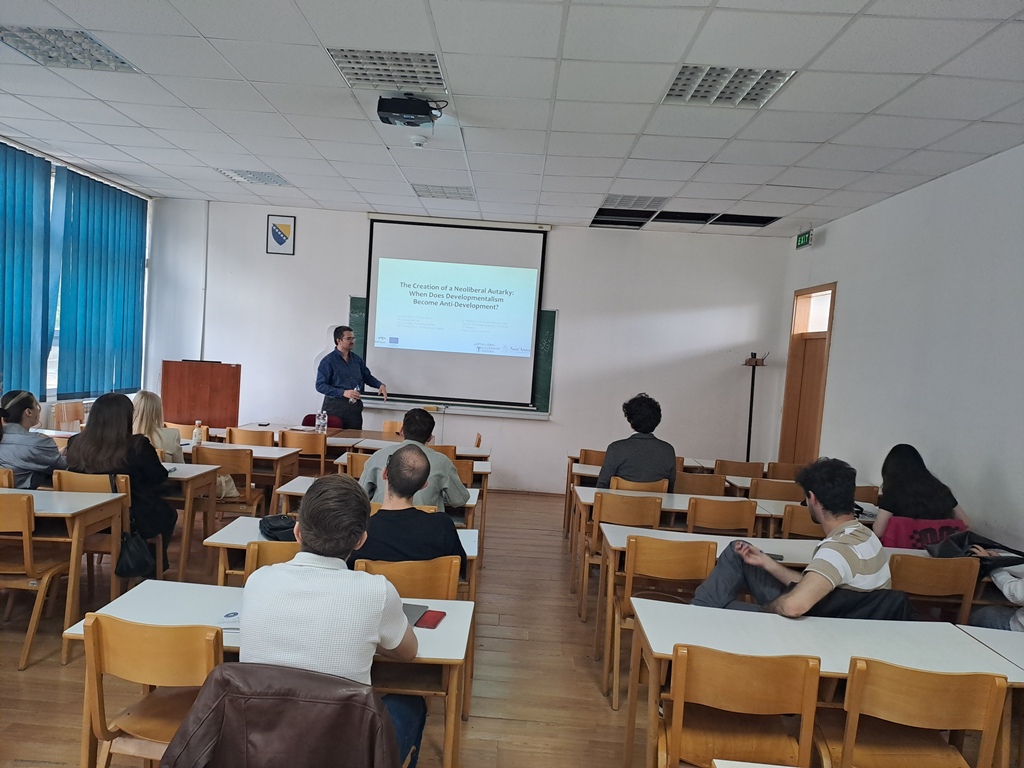
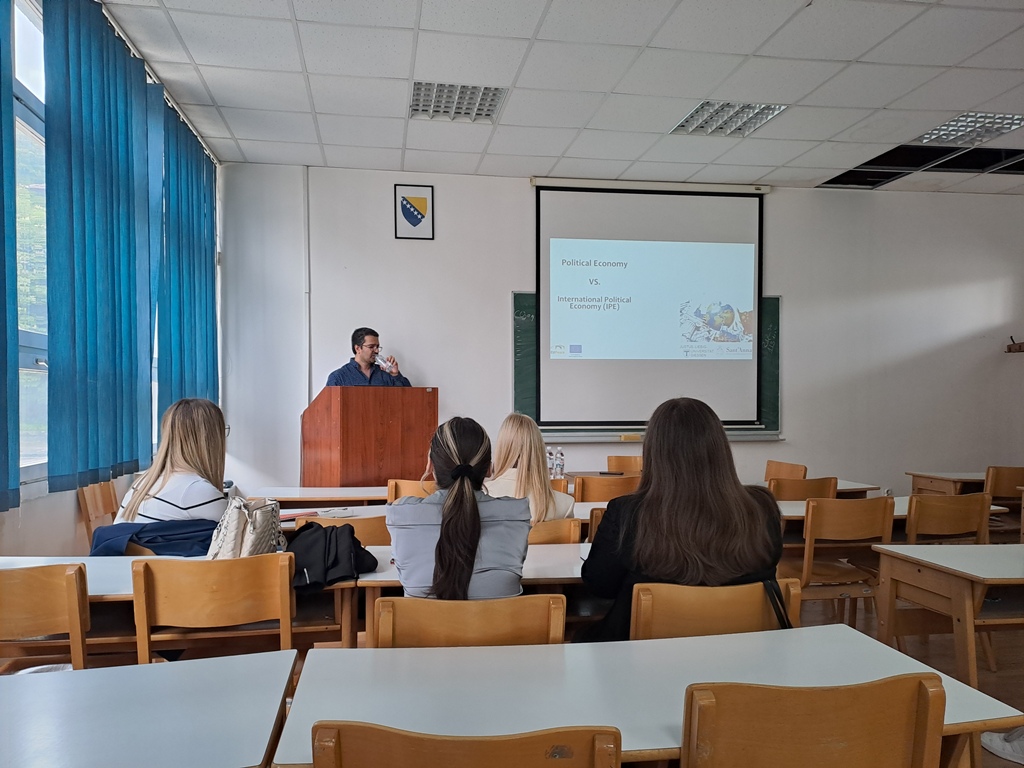
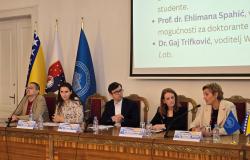
As part of the 5th International Week hosted by the Faculty of Political Sciences, University of Sarajevo (18–22 May 2026), Mr. Farhad Feizi, a double-degree PhD researcher in Social Sciences at Justus Liebig University Giessen (Germany) and Management at Sant’Anna School of Advanced Studies (Italy), delivered a guest lecture entitled “The Creation of a Neoliberal Autarky: When Developmentalism Does Become Anti-Development?”. The session was facilitated by Prof. Dr. Ehlimana Spahić and formed part of the Faculty’s international teaching and knowledge-exchange activities.
Drawing on his doctoral research, Mr. Feizi examined Iran’s developmental trajectory since the mid-19th century, focusing on the impact of external pressures such as sanctions and financial conditionality. The lecture explored how political and economic reforms implemented after the 1979 revolution contributed to the emergence of a neoliberal autarkic system characterized by economic isolation, limited access to transnational capital, and a reduced role of the state in socio-economic development.
The presentation highlighted the consequences of this model, including economic instability, rising unemployment, and recurring public protests. The lecture concluded with an engaging discussion, offering participants valuable insights into the contextual limitations and challenges of developmentalist approaches.
The activity reflects the EUPeace Alliance’s commitment to strengthening international teaching, research collaboration, and academic mobility. Mr. Feizi is currently conducting research at the University of Sarajevo through the EUPeace Doctoral Mobility programme, which supports research exchanges and interdisciplinary cooperation among partner institutions. The lecture also contributes to the objectives of EUPeace Research Hubs, which foster collaboration among researchers, doctoral candidates, and academic staff across the Alliance. By connecting mobility, teaching activities, and research excellence, the Hubs create opportunities for knowledge sharing and joint exploration of contemporary societal challenges within the EUPeace framework.