Charter on Inclusion in Culture Signed: A Joint Commitment to a Culture Where Everyone Can Access, Participate, and Create
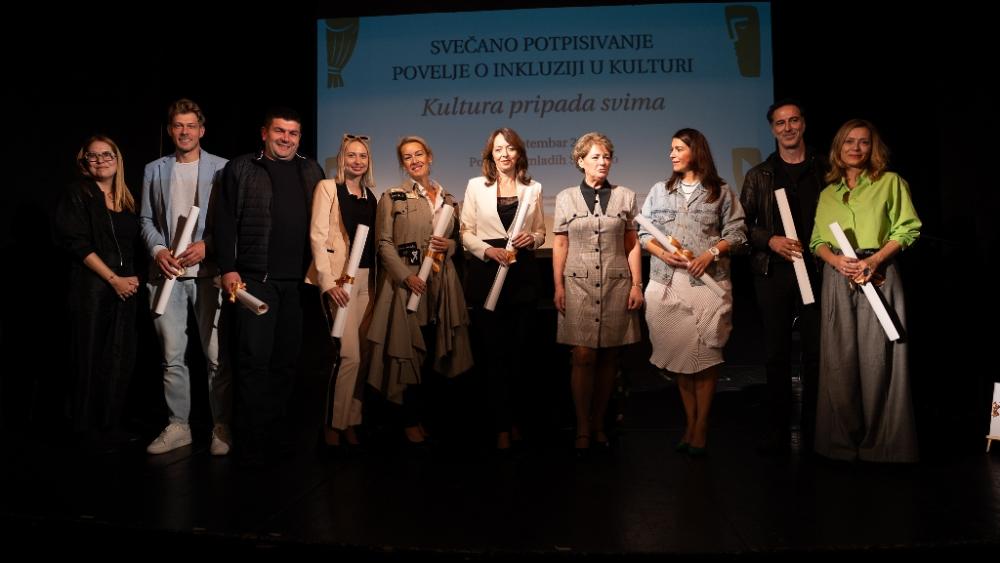


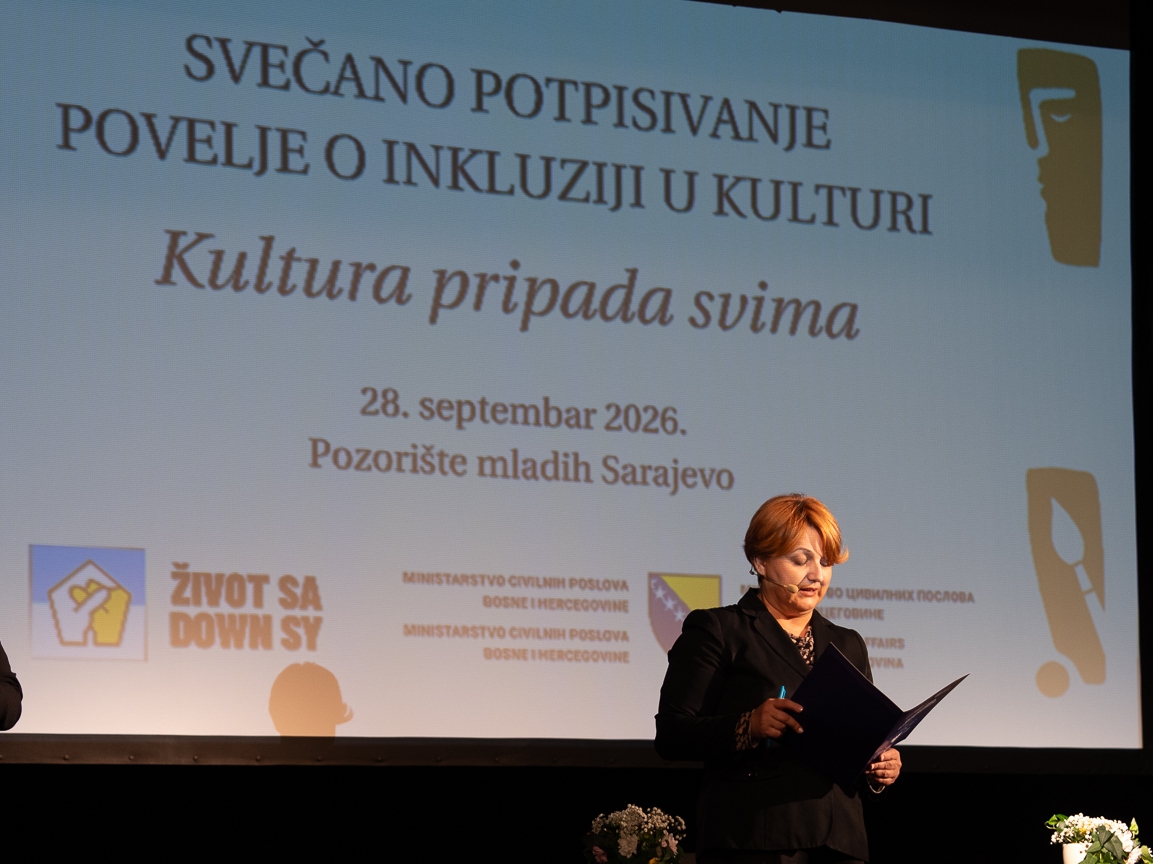
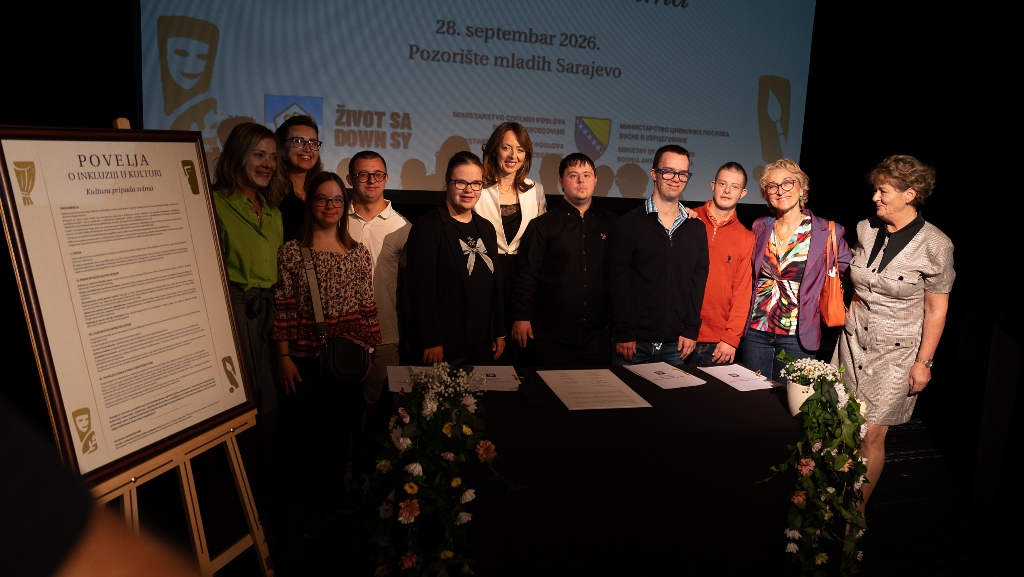
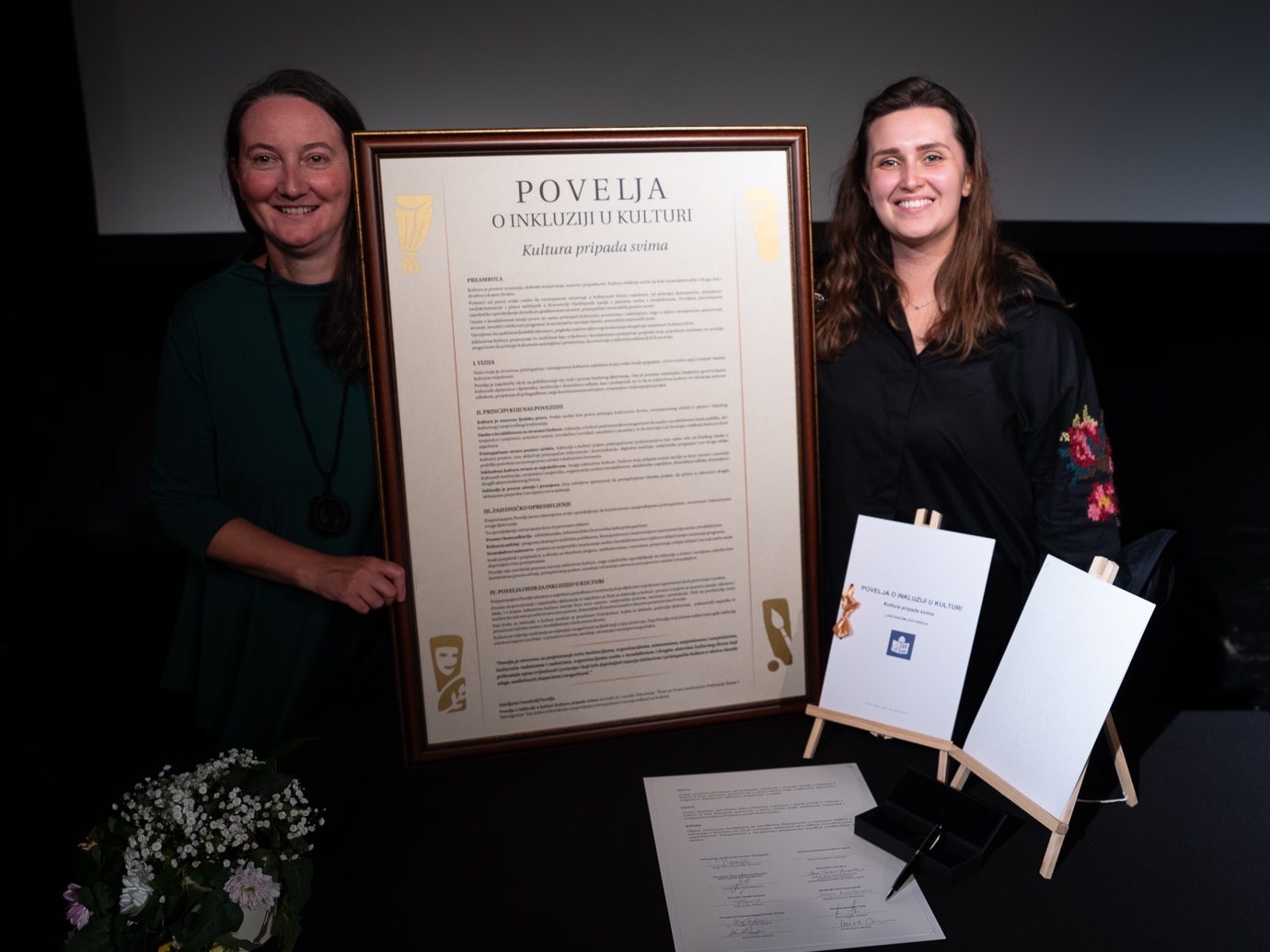
Sarajevo, 28 September 2026 – A Charter on Inclusion in Culture was solemnly signed at the Youth Theater Sarajevo. This document represents a joint commitment to developing a more accessible, equitable, and inclusive culture in Bosnia and Herzegovina.
The Charter was created within the framework of the "Culture Belongs to Everyone" project, funded by the Ministry of Civil Affairs of Bosnia and Herzegovina. Representatives of the Association "Life with Down Syndrome of the Federation of Bosnia and Herzegovina," the Ministry of Civil Affairs of BiH, the Federal Ministry of Culture and Sports, the Youth Theater Sarajevo, the Sarajevo War Theater – SARTR, the Home Herceg Stjepan Kosača Mostar, and the National Theater Tuzla participated in drafting the Charter.
The signing ceremony was opened by Sevdija Kujović, President of the Association, who thanked the guests for attending and stated, among other things: "Culture belongs to everyone. That is the starting point from which we began. For the Association 'Life with Down Syndrome of the Federation of Bosnia and Herzegovina,' the right to equal participation in cultural life is part of a broader understanding of the rights of persons with disabilities and their place in the community. Therefore, for us, culture is not an isolated topic, but part of long-term work on realizing rights and ensuring equal participation of persons with disabilities in all areas of life. Today, after twenty years of the Association's work, we see the Charter on Inclusion in Culture as a kind of culmination of that experience and a step through which that experience gains a wider, common framework."
Addressing the guests on behalf of the Board, Binasa Goralija spoke about art as inspiration and space for all: "We promise to continue working together on this. Because when we remove barriers, not only persons with disabilities benefit. We all benefit: richer art, more diverse culture, and a society more open to diversity. Therefore, let art be an inspiration, and let culture truly be a space for everyone. Perhaps that is the best message of today's event. We do not want a culture where persons with disabilities are only the audience. We want a culture where they create, decide, participate, and inspire others."
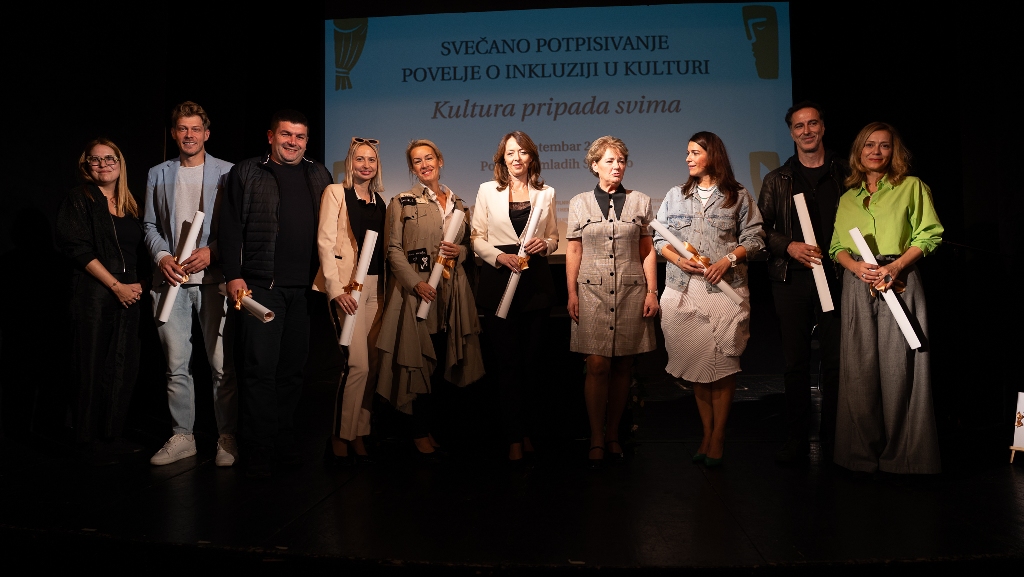
The first Charter signatories are:
- Ministry of Civil Affairs of Bosnia and Herzegovina, Dubravka Bošnjak, Minister
- Federal Ministry of Culture and Sports, Sanja Vlaisavljević, Minister
- University of Sarajevo, Arma Tanović, Vice-Rector for Art, Artistic Research, Culture and Sports
- Sarajevo War Theater – SARTR, Maja Burazerović, Director
- Youth Theater Sarajevo, Ismir Fazlić, Director
- Home Herceg Stjepan Kosača Mostar, Danijel Vidović, Director
- National Theater Tuzla, Elmir Krivalić, Director
- Alena Džebo, Actress
- Ermin Bravo, Actor
- Association "Life with Down Syndrome of the Federation of Bosnia and Herzegovina," Sevdija Kujović, President
The signing of the Charter marks the beginning of a joint process in which the principles of the Charter will be further developed through cooperation, exchange of experiences, and concrete changes in cultural practice.
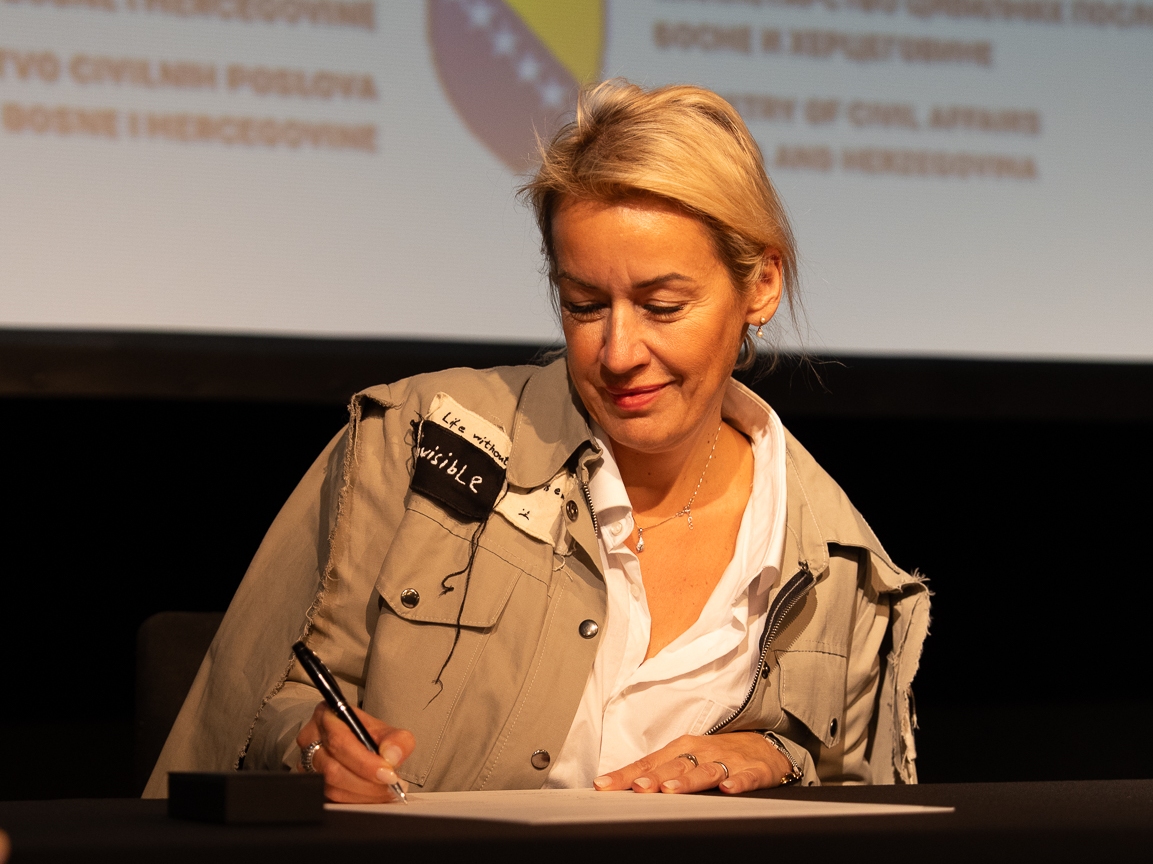
The first signatory of the Charter was Dubravka Bošnjak, Minister of the Ministry of Civil Affairs of Bosnia and Herzegovina. After signing, she addressed the gathering, stating, among other things: "When we say that 'Culture Belongs to Everyone,' it sounds like something that goes without saying. But it is not! It is not enough for the doors of theaters, museums, galleries, or concert halls to be open. The real question is: Can everyone actually enter through those doors, participate, create, and be an equal part of cultural life? Inclusion is not a project. Inclusion is not charity. It is a systemic obligation. It is what makes a society civilized and humane. For the Ministry of Civil Affairs of Bosnia and Herzegovina, today's signature is an obligation to try to translate these principles into concrete policies, programs, public calls, and cooperation with cultural institutions wherever we have the space to act."
Elmir Krivalić, Director of the National Theater Tuzla, addressed the gathering with the following words: "It is an honor for the National Theater Tuzla to participate in this historic moment for culture by signing the Charter on Inclusion. We hope it will not remain just words on paper, but that through institutional action we will enable culture to truly belong to everyone. On behalf of the National Theater Tuzla, I express a strong commitment and belief that the authorities will recognize the importance of this project and help us make art accessible to everyone. We believe that the foundation of art is humanity – let that be our guide and strength to consistently implement everything we have committed to by our signature in the coming period."
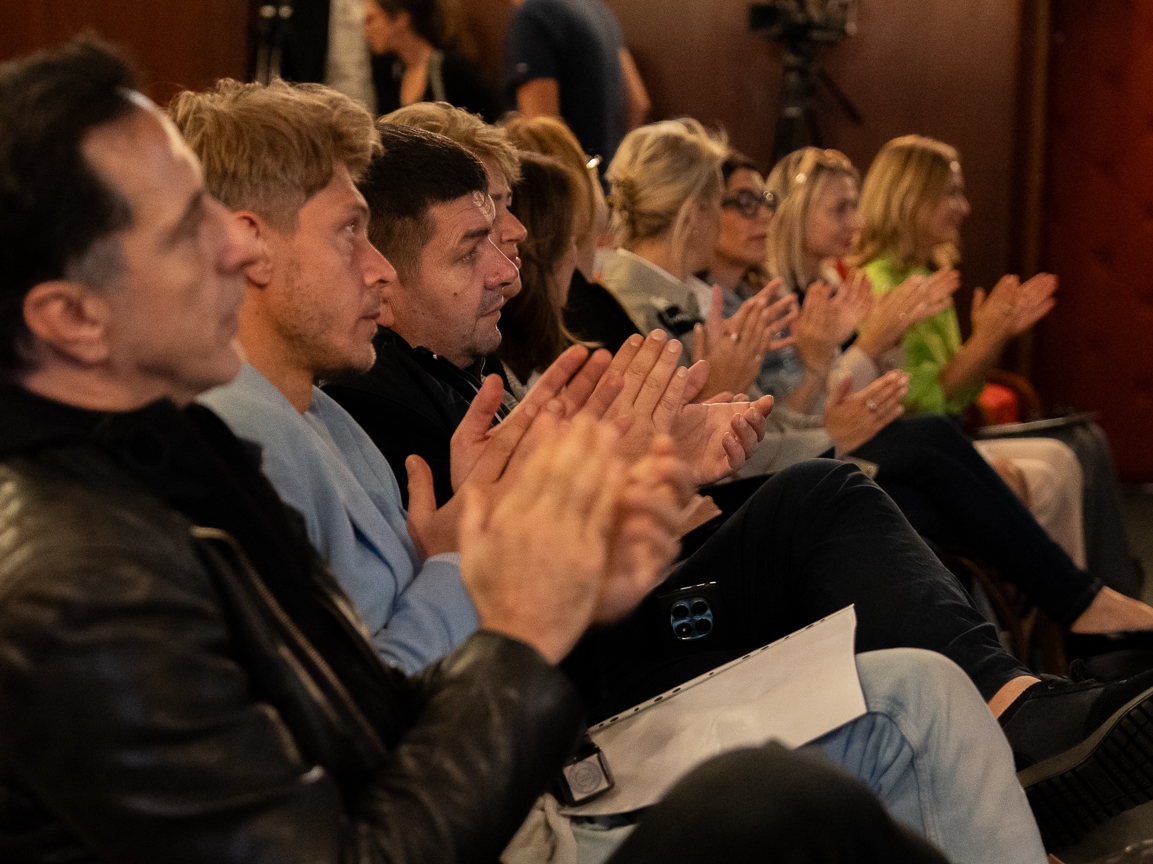
Numerous guests from the cultural and educational sectors, representatives of institutions, civil society organizations, artists, and other guests who contribute through their work to the development of culture and society gathered at today's ceremony. Their presence is important to us because it shows that inclusion in culture can and should be discussed together, through different roles, experiences, and responsibilities.
Charter’s Significance
The significance of today's signing of the Charter goes beyond the mere act of signing a document.
For persons with disabilities, it is important because it speaks to the fact that their right to equal participation in cultural life must be recognized and implemented in everyday practice. Culture should not be a space where someone is included only as an audience, but where persons with disabilities can also be artists, authors, performers, collaborators, initiators, and equal creators of cultural and artistic values. Such an understanding of inclusion implies that accessibility is not limited to physical access to cultural spaces. It also encompasses information and communication, digital content, accessibility of artistic content, necessary support, and other conditions that enable equal participation.
For cultural institutions, institutions, artists, the educational sector, and organizations that stand behind this Charter today, this is an opportunity to jointly open a space for learning, exchanging experiences, and changing practices.
For society as a whole, this is a message that inclusion is not an issue concerning only one group of people. It speaks about what kind of community we want to build – a community where diversity is not an obstacle to participation, creation, and belonging.
Therefore, we do not see today's signatures as confirmation that inclusion in culture has already been achieved. We see them as a public commitment to continue working on it – each from their own role, but together.
Inclusion as a Process of Joint Learning and Change
The continuation of this process will be enabled through the Hub for Inclusion in Culture, which will represent a space for connecting cultural institutions, artists, authors, organizations of persons with disabilities, experts, decision-makers, financiers, and other actors interested in the development of inclusive culture.
Access to the community will imply understanding and accepting the purpose and principles of the Charter, as well as the willingness to apply them in one's own actions. This means that inclusion is not viewed only through a declarative commitment, but also through the quality of artistic and cultural work, accessibility, equal participation, responsibility, and concrete changes in practice.
The goal is for the Hub for Inclusion in Culture and the community developing around it to gradually expand, gathering new institutions, artists, authors, organizations, and other actors who understand the purpose of the Charter and can make a real contribution to its implementation.
The Charter represents a call for a culture that is not shaped by who can fit into existing frameworks, but a culture that continuously evolves to enable access, equal participation, and creation.
It is simultaneously a guide for current and future generations of cultural workers, institutions, and decision-makers, and a reminder that inclusive culture develops through encounter, cooperation, learning, new ideas, and concrete changes.
Because culture belongs to everyone!