Institute for Research of Crimes Against Humanity and International Law has presented an interactive map “The Shelling of Sarajevo During the Siege”
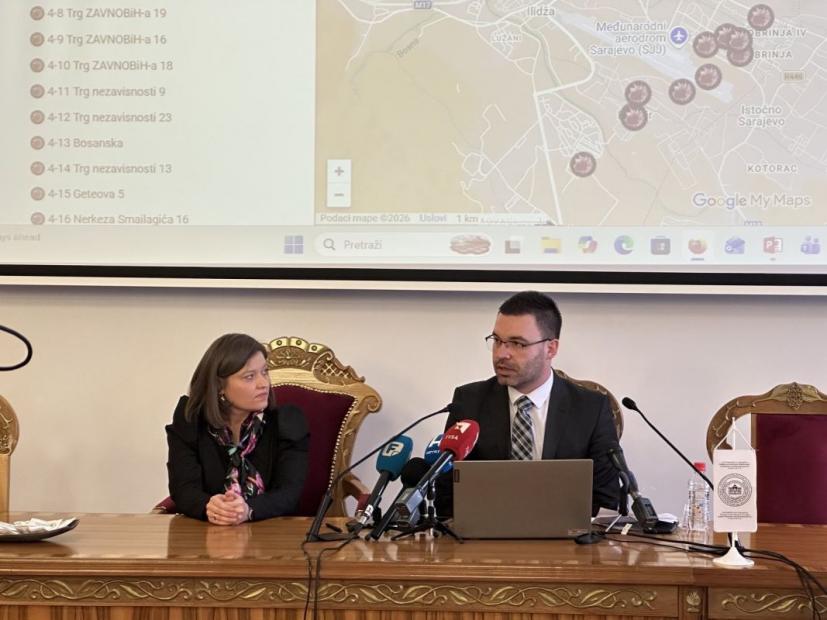


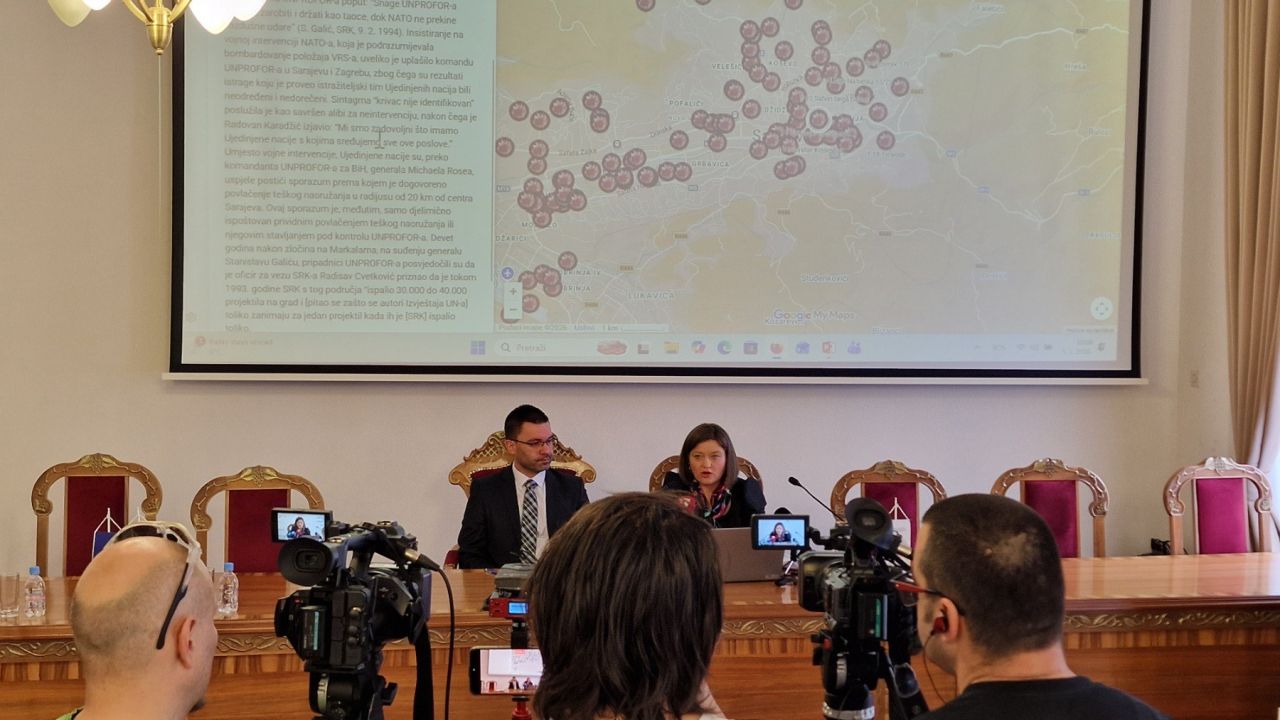
The University of Sarajevo – Institute for Research of Crimes Against Humanity and International Law has presented an interactive map titled “The Shelling of Sarajevo During the Siege,” authored by Dr. Merisa Karović-Babić, Senior Research Associate at the Institute. The interactive map was presented to the public on the occasion of the 32nd anniversary of the massacre at the Markale marketplace and the Day of Remembrance for citizens of Sarajevo killed and wounded during the siege from 1992 to 1995.
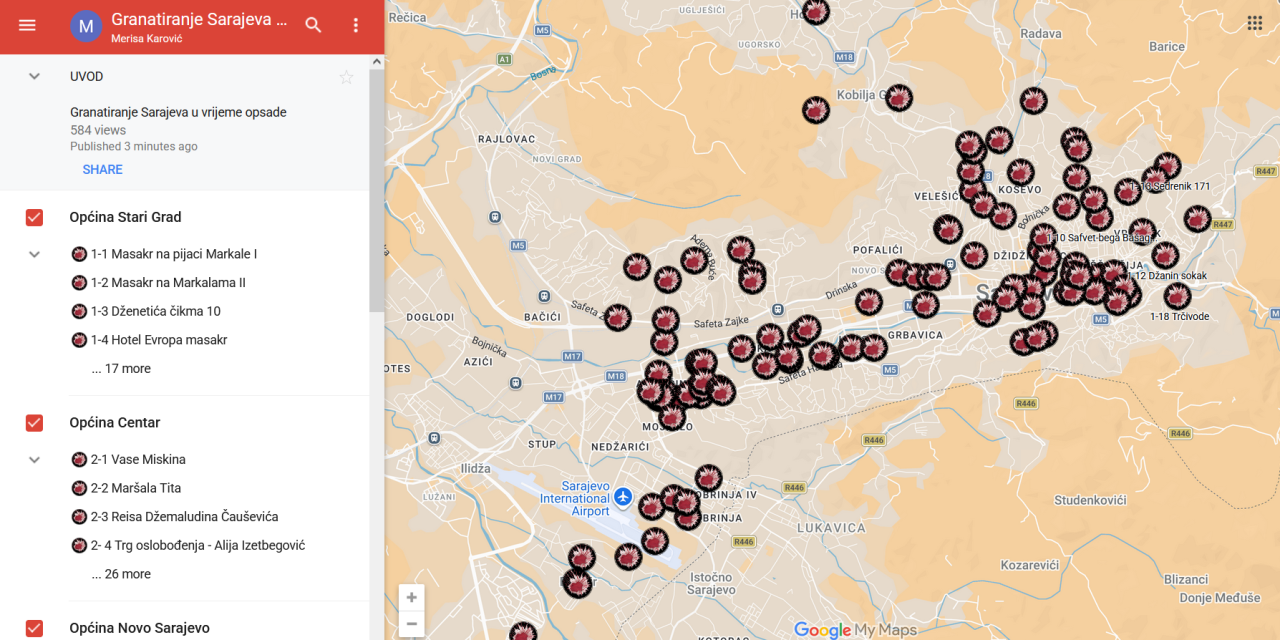
The interactive map “The Shelling of Sarajevo During the Siege” presents, in digital form, the results of many years of scientific research into mass crimes against Sarajevo’s civilian population. It encompasses 116 locations at which three or more civilians were killed at the same time and in the same place.
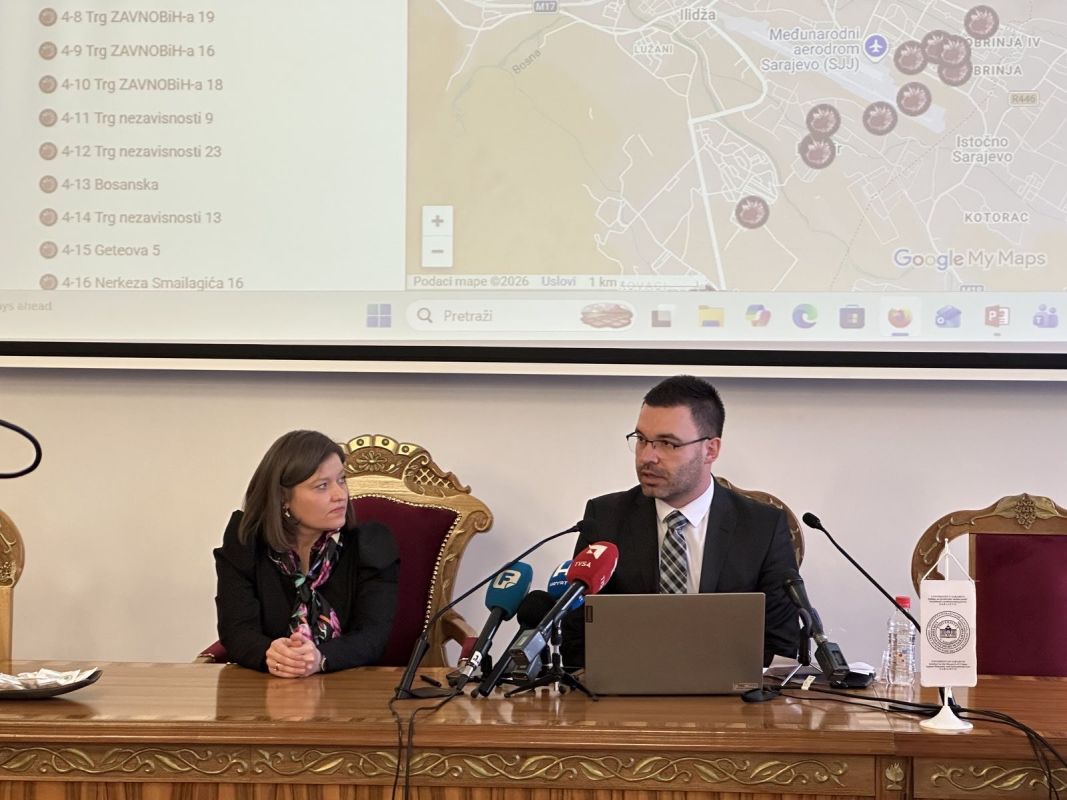
At the press conference, addresses were delivered by Dr. Muamer Džananović, Director of the Institute, and Dr. Merisa Karović-Babić, Senior Research Associate at the Institute.
Dr. Džananović emphasized:
“By presenting the interactive map The Shelling of Sarajevo During the Siege, the Institute continues its core mission—scientifically grounded documentation of crimes and the preservation of legal and historical truth. This project, based on years of empirical and archival research, provides precisely mapped locations of massacres, along with the names of victims and data drawn from primary sources. The interactive map is not merely a digital representation of the past—it is also a knowledge base, evidentiary material, and a powerful educational tool. Making it available to the public represents an important step toward broader access to historical facts.”
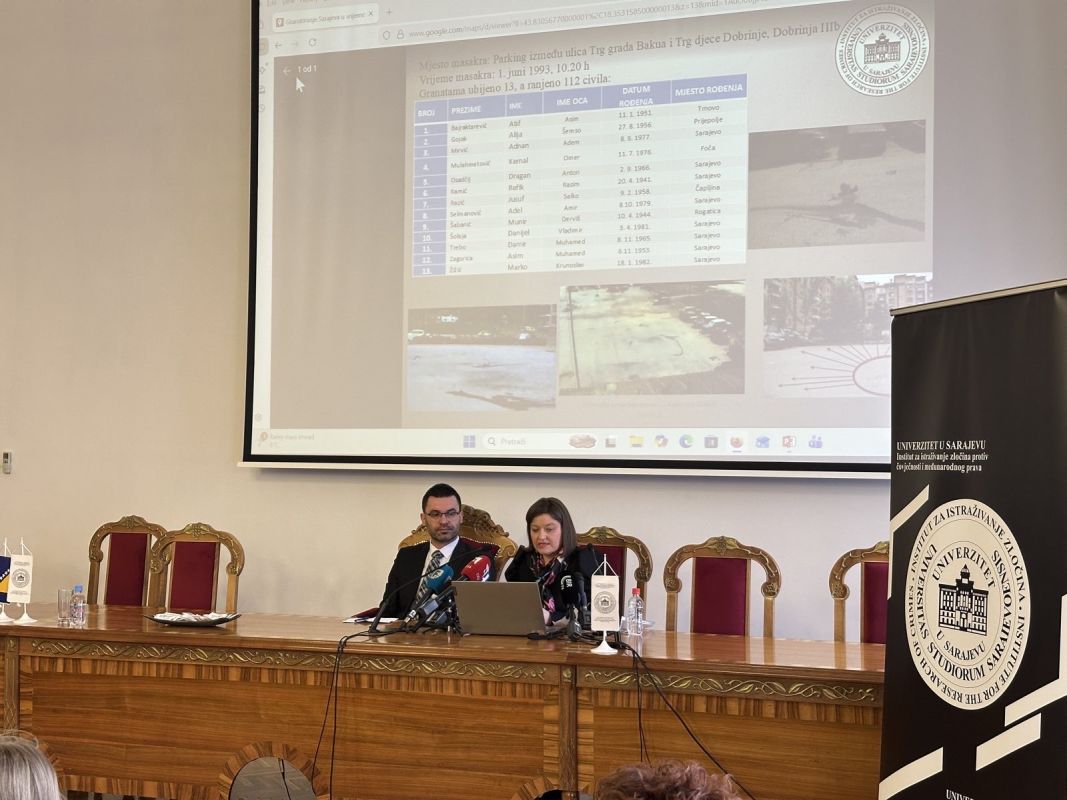
During her presentation, Dr. Karović-Babić introduced the content of the interactive map and the results of her research, noting that it forms part of her ongoing work on the project researching crimes committed in Sarajevo between 1992 and 1995:
“On the slides and photographs accompanying each location mapped on the chart, we list the number and identities of the victims (surname, first name, father’s name, date and place of birth), as well as data relating to the date, time, and place of the crime, the circumstances, and a detailed description of the massacre. The approach applied in this interactive map aims to objectify historical facts and reduce the pervasive manipulation of crimes. The content published in the interactive map is dedicated to all victims of the barbaric siege of Sarajevo, to future generations, and to educational institutions, with the goal of educating students and confronting Bosnian-Herzegovinian society with these crimes.”
The interactive map represents a unique database on mass crimes against Sarajevo’s civilian population during the siege, based on years of empirical and archival research. The data presented on the map were collected from numerous primary sources, including judicial and police documentation, medical records, extracts from death registries, eyewitness testimonies, as well as domestic and international archival materials. The map’s particular value lies in the use of previously unpublished materials from the author’s personal archive, which are being made available to the wider public for the first time.
Through the precise mapping of massacre locations by municipalities and residential areas, accompanied by descriptions of the circumstances of the crimes and the identities of the victims, the project provides a systematic insight into the scope and patterns of shelling of civilian targets during the siege of Sarajevo. The published content aims to preserve the dignity of the victims, strengthen the culture of remembrance, and contribute to the process of societal confrontation with war crimes, serving as a significant educational resource for educational institutions, researchers, students, and future generations.
The interactive map can be accessed via the following link.